
The latest stretch of our year-long wander took to the sea. This saga began at the end of August, as we flew from Aberdeen Scotland to Kristiansund Norway, to meet up with our friends Karen and Tom on their lovely sailboat Sea Rose. The Scotland theme of “cold and wet” continued in Norway, so after a week we decamped to Turkey and Greece to sail the Dodecanese and Cycladic islands.
Sailing in Norway
In a word: beautiful. Though surprisingly cold for early September.
First, a bit about Karen and Tom. We have known them a long time, working together back when we all were youngish. We lost track of each other for many years, and reconnected at the funeral of our dear friend and inspiration, Warren. Karen and Tom decided to retire about 7 years ago, and spend their summers sailing. They had a nice boat which they sailed in the US for a season, but they wanted to sail in Europe and weren’t excited about taking that boat on a transatlantic romp. So they sold her and bought brand new Sea Rose (Jeanneau Sun Odyssey 440), a 39′ (12m) sloop that they commissioned in France. 2023 is their sixth season sailing Sea Rose. If you have any interest in sailing, take a look at their blog.
Tony’s and my experience sailing rounds to zero, so our roles were to (a) do as we were told, (b) wash dishes, and (c) provide conversation and entertainment. A low bar, but I hope we nailed it well enough to be invited back!
Kristiansund, though a small city, was far and away the biggest place we’d see until we arrived at Trondheim, a week later. We harbored or moored in a different place each night, ranging from tiny villages to remote outposts and isolated moorings. The “season” in Norway ends in August, so we seldom had to negotiate crowded harbors.

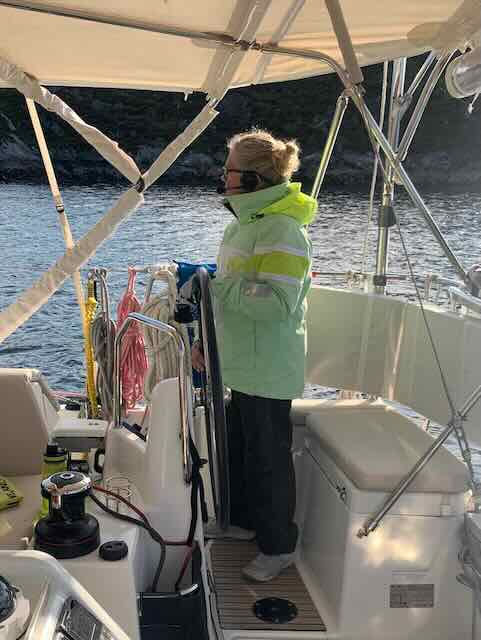
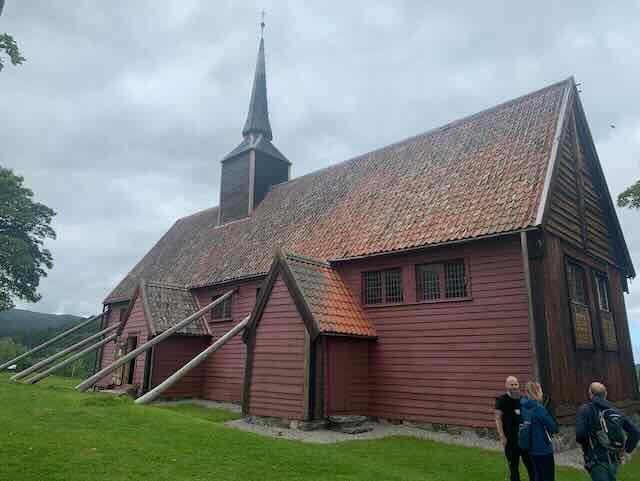

The first half of our week aboard was dominated by strong winds, which dictated where we should sail and harbor. There are a ton of resources for weather and wind forecasts, as well as to find good places to harbor. The trick is to find a harbor or mooring that is protected from the predicted wind direction with a good margin of error. The water has to be deep enough for Sea Rose’s 2m keel–and don’t forget the tide! But when setting anchor, of course the water can’t be too deep. Norway is chock full of deep fjords: they practically invented them.
Karen and Tom are careful sailors. It was interesting to watch them research and discuss a plan, and it was fascinating to watch them execute it. Dropping an anchor in a cove involved finding a likely spot, then running a circle around that spot at the swing length of the anchor line, watching depth all along the way. It’s like a dog turning around three times before plopping. The charts are online and detailed, but not 100% accurate, so a wise sailor checks before setting anchor.
The most stressful time–for me as an observer, anyway–was coming into the harbor at Veidholmen on Smølo Island. This little harbor was an excellent choice because the winds were forecasted to be especially fierce, and it is a tiny harbor, protected on all sides by land and buildings. We motored in from the southwest, and did this tricky spiral, around the corner of a building over the water, to enter the harbor. Sea Rose at 39′ is not a big boat, but this is a tiny harbor, and already full because of the upcoming storm. T&K didn’t panic; they just surveyed the place, identified the one possible place to moor, turned the boat around in the–let me say it again–tiny harbor, and got settled.
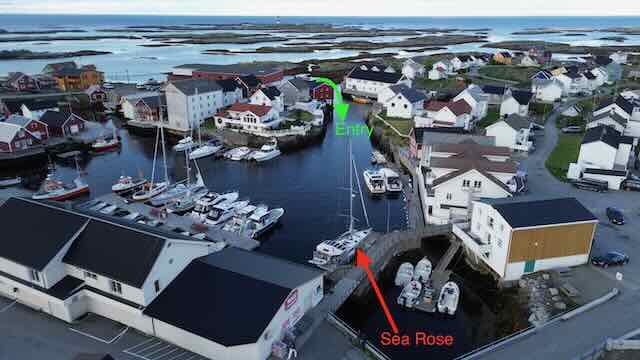
Tony and I observed while Karen drove and Tom sounded the depth and wrangled the bumpers and lines. T&K use bluetooth headsets to communicate during complex operations. It’s so much better than shouting, because (a) your partner can hear much better, and (b) you don’t get that emotional reaction to someone shouting at you. The exit from Veidholmen the next morning was also tense. Although we didn’t have to pirouette, once free of the harbor, Karen had to navigate through a series of flagged gates among those islands at the top of the picture. Tom was on the bow confirming depth readings, and Karen’s side of the conversation included memorable lines like “ok, this next set I need to hug to the right? Right?” Needless to say, this operation was conducted under power, not sail.
Karen and Tom really sail. The moment the winds are favorable, the sails go up and the engine goes off. Sea Rose is modern and well equipped for cruising. All operations can technically be handled by one person, and raising the mainsail takes literally a minute. Raising the jib and trimming the sails are operated by electric windlasses that are within reach of the helms person. Sweet! I expect the cost of that technology is offset by improved safety and reduced diesel costs as they sail the sailboat. During our week on the boat there was only one day with lots of motoring. But the week before we arrived, they had to motor almost 100% of the time as the winds were too light.
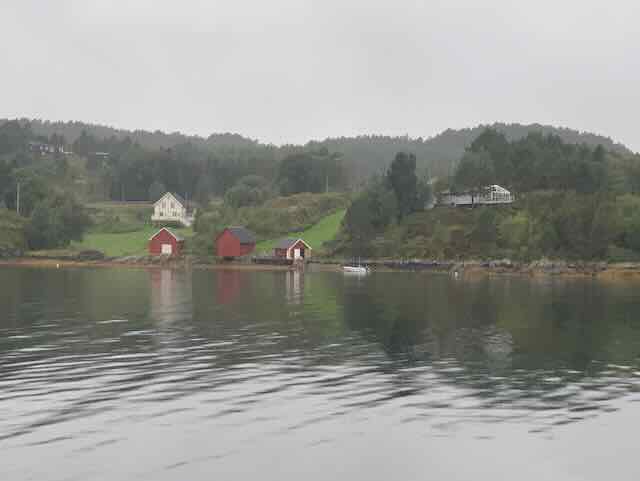
The photos below give an idea of the kind of beautiful landscape we sailed through.

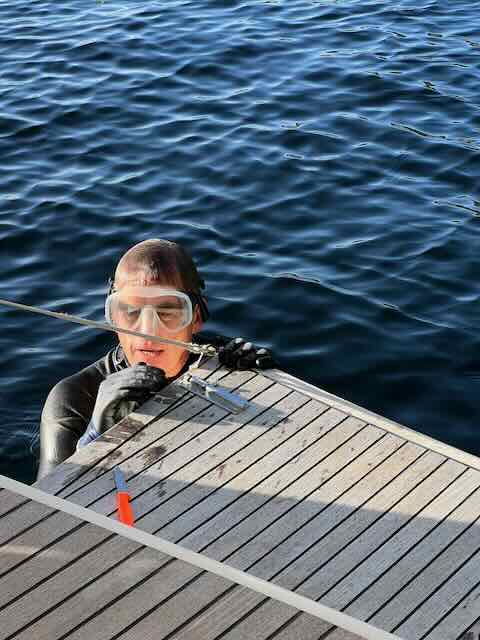
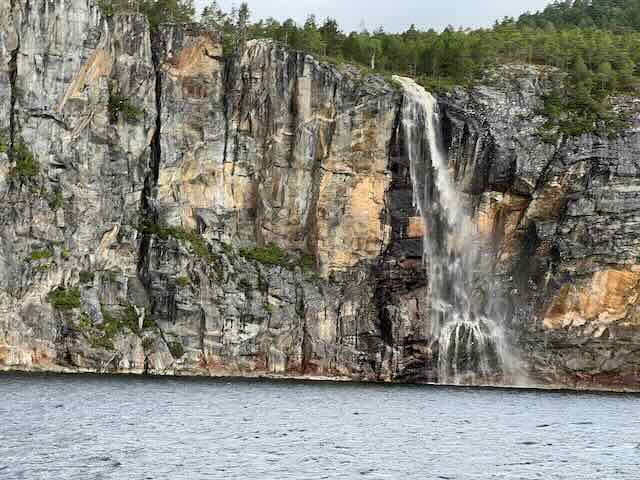
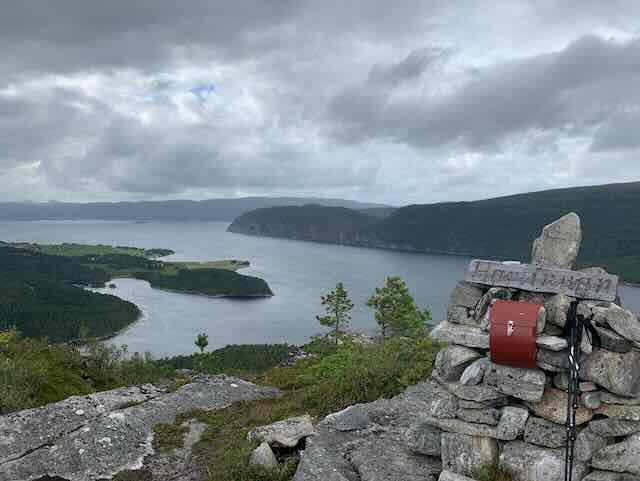
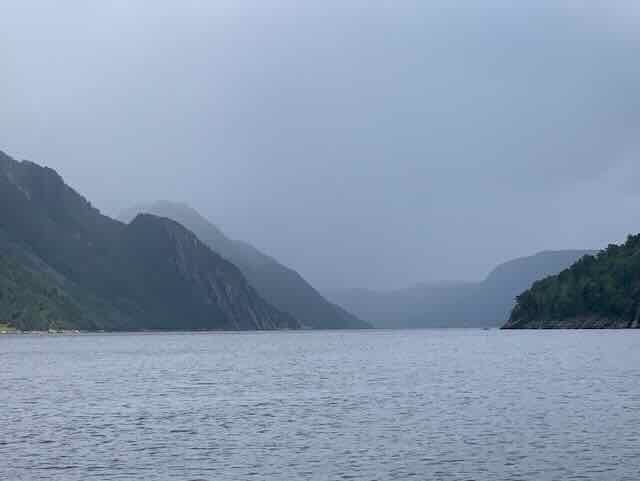
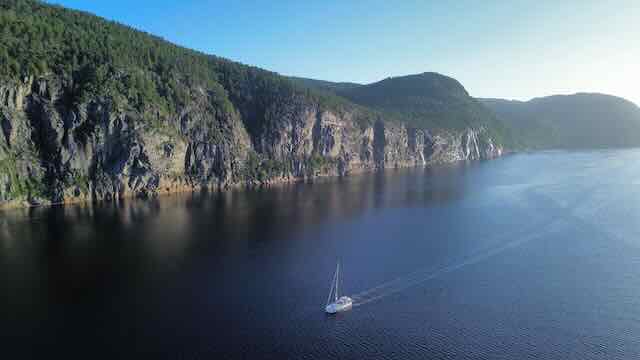
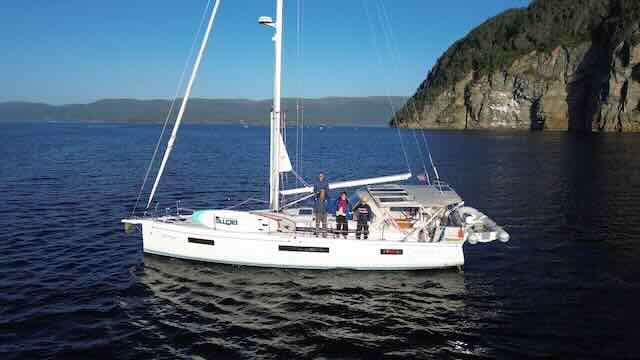
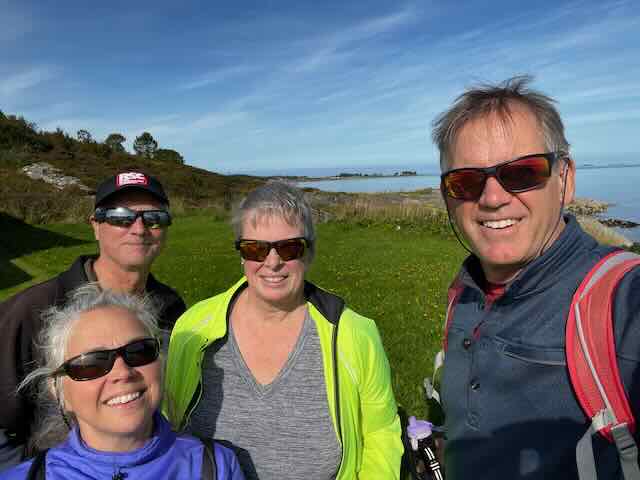
We were sad to disembark Sea Rose at Brekstad and take a ferry to Trondheim and from there a flight to Bodrum Turkey, for the next phase of our trip.
Turkey and Greece
In a word: pampered.
The long-delayed trip around the Greek islands in a turkish gulet (wooden sailing boat) had been scheduled for a year. It was a big pin in the diagram of our year of travel. This is the fourth time that Tony has tried to take this trip. Each time, disaster struck:
- Originally planned with 8 friends, one of whom had a stroke shortly before the trip
- Attempt #2, 2017: Tony’s father passed away as we were about to step on the boat. (Joy, rather cold-heartedly, continued the trip while Tony flew home from Athens.)
- Attempt #3, 2020, guess what? Global pandemic.
- This year we feared an extinction event, but the trip occurred without disaster. Hurray!
Although the trip was disaster-free, it wasn’t without its problems. The original itinerary had us departing from Bodrum, visiting Kalymnos in the Dodecanese (the Greek islands very close to Türkiye), then crossing to the Cycladic islands of Amorgos, Santorini, Ios (not iOS you stupid computer), Paros, Mykonos and Delos, then back to the Dodecanese to visit Ikaria, Fourni, Patmos, Lipsi, and Leros before returning to Bodrum. Unfortunately, high winds in the Cyclades prevented us from crossing over, so we spent two weeks cruising the lesser-known Dodecanese. It was fabulous! Aydin, our friend and tour guide, had to make up a new itinerary on the fly. Luckily, he’s great at making things up. Check out his website and beautiful promotional videos at Eon Tours.
Joy’s suitcase did not make it from Trondheim to Bodrum. Luckily I had stashed a change of clothes in a carryon, and laundry dries quickly in the Greek sun. I was reunited with my suitcase (though not all of its wheels), about halfway through the trip. Kudos to Aydin’s logistical genius. This was my first time an AirTag was useful: it was fun to watch my bag work its way across Scandinavia and Turkey.
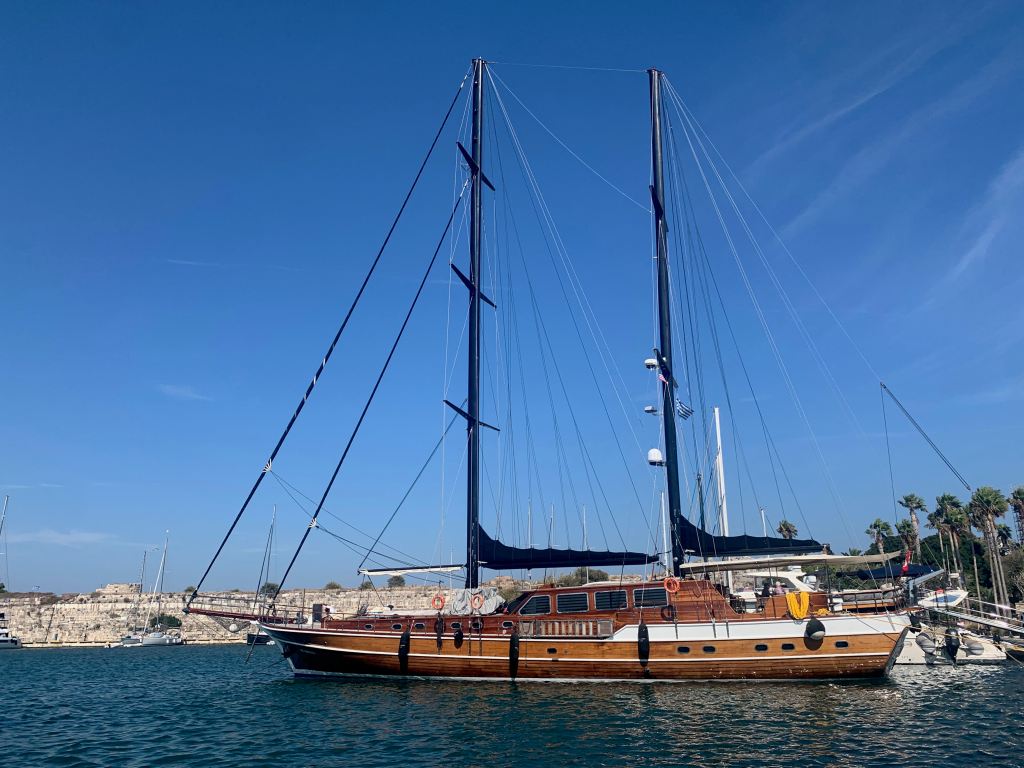
The double-masted gulet named Kaya Guneri Plus is 32m (118′) long, 3x as long as Sea Rose. We were 11 passengers, our guide Aydin, and 6 crew. Cabins were deluxe with real beds and real bathrooms, and excellent air conditioning. Of course the deck area was super comfortable with lots of room for lounging and dining. Meals on board were extravagant, and I was actually disappointed when we headed into port for a restaurant meal. It took an effort to not over-eat; I wasn’t entirely successful.


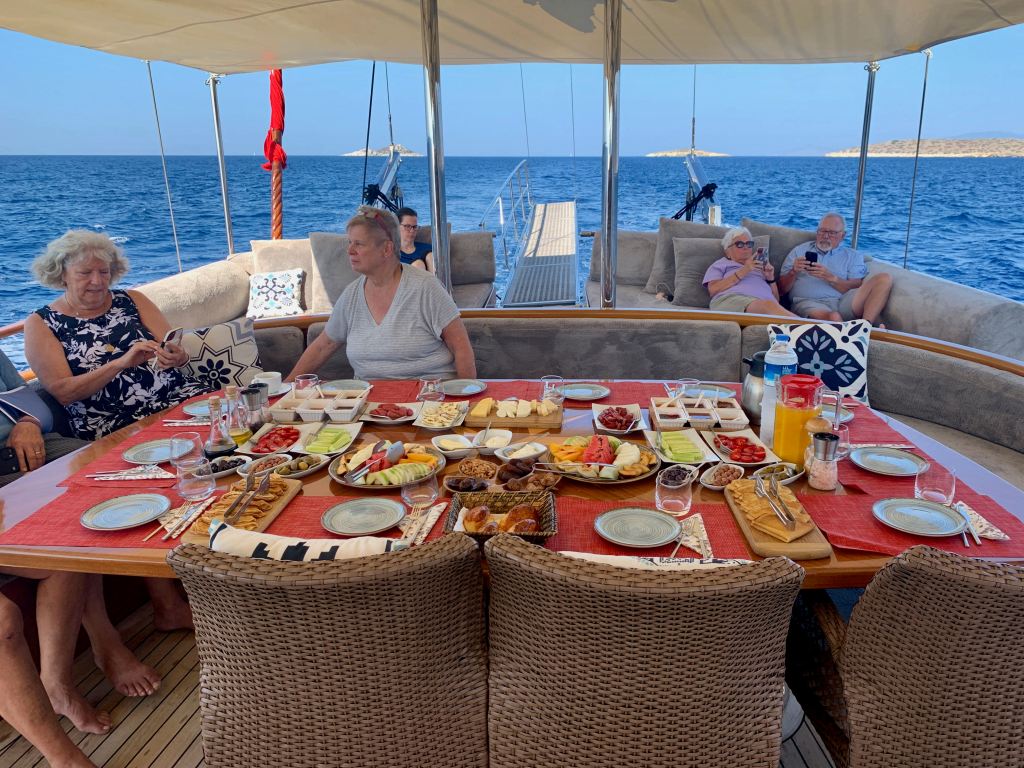
We began with a tour around several Turkish sites near Bodrum, most notably the archaeological site of Stratonicea. This ancient city is typical of what you can see in Türkiye: early Bronze age settlement, then possibly Hittite (1200 BCE), then Carian, Lycian, Persian, Greek, Roman, and Byzantine. Like much of Turkey, this area is prone to earthquakes, which wreak havoc on stone construction. As a semi-reformed economist, I was most delighted by the very long inscription of Diocletian’s price list. As the Roman empire was struggling in the 4th century CE, emperor Diocletian attempted to stem inflation with price controls, which were inscribed in stone in various places throughout the empire. This worked about as well for Diocletian in 301 as it did 1,670 years later for Nixon. I love the price list’s more-or-less spreadsheet format, and the occasional edits and amendments. And the specificity: from Artichokes versus Artichoke Hearts, to Pedagogues (50/pupil/month) versus Teacher of Arithmetic (75/pupil/month).
We also toured Bodrum Castle, which the Crusaders (Knights of St. John) erected in the early 15th century with material pillaged from the nearby ruins of The Mausoleum (one of the 7 ancient wonders). Though Tony and I have visited Bodrum before, the castle’s exhibits and especially its underwater archeological museum have improved in the meantime.
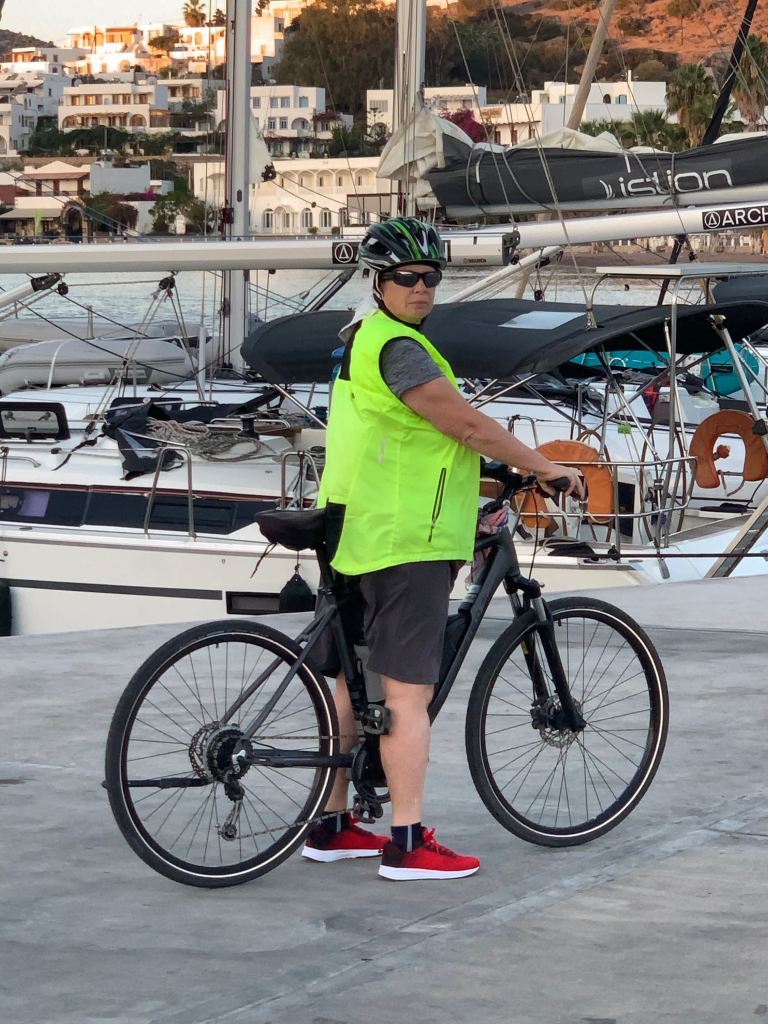
We left Turkey the next day, and sailed (motored) to a lovely cove where we swam in the warm Aegean, and then visited the town of Kalymnos. The next day, we were at the island of Leros, where the highlight for some of us was a bike ride over the hill to the other side of the island, where the boat had anchored while we were laboring. The boat carried enough e-bikes for everyone who expressed interest (some 10 bikes). A core group of 4-6 of us went cycling whenever we could, and sometimes others joined us. We bicycled maybe every 2nd or 3rd day, which is more than was in the original itinerary but our plans were evolving as we evaded the fierce winds.
There were many differences between the sailing experiences on Sea Rose and the Turkish gulet, but most notable was the approach to actually sailing. As I mentioned, Tom and Karen put the sails up on Sea Rose whenever there was enough wind. If it was too windy, they put up less canvas. The gulet, on the other hand, put its sails up only once, for a quarter hour (a very strong gust snapped a line and that was that). Turkish gulets certainly can sail—our boat even races upon occasion—but I understand the captain’s decision to keep the sails down and the engine on. The passengers are not hard-core sailors who are excited about knifing through swells and keeling over in strong winds. I do wonder if it’s worth travelling on a sailboat if you never actually sail; it seems a nicely designed motor yacht would be cheaper and arguably better. But sailboats are so romantic!
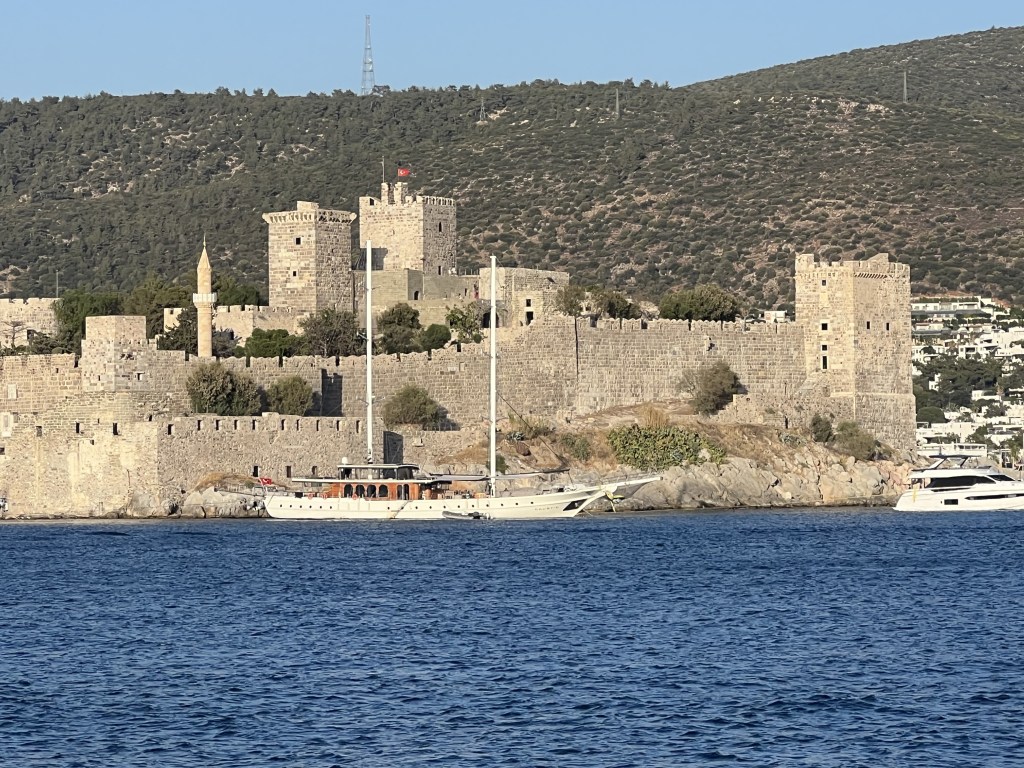
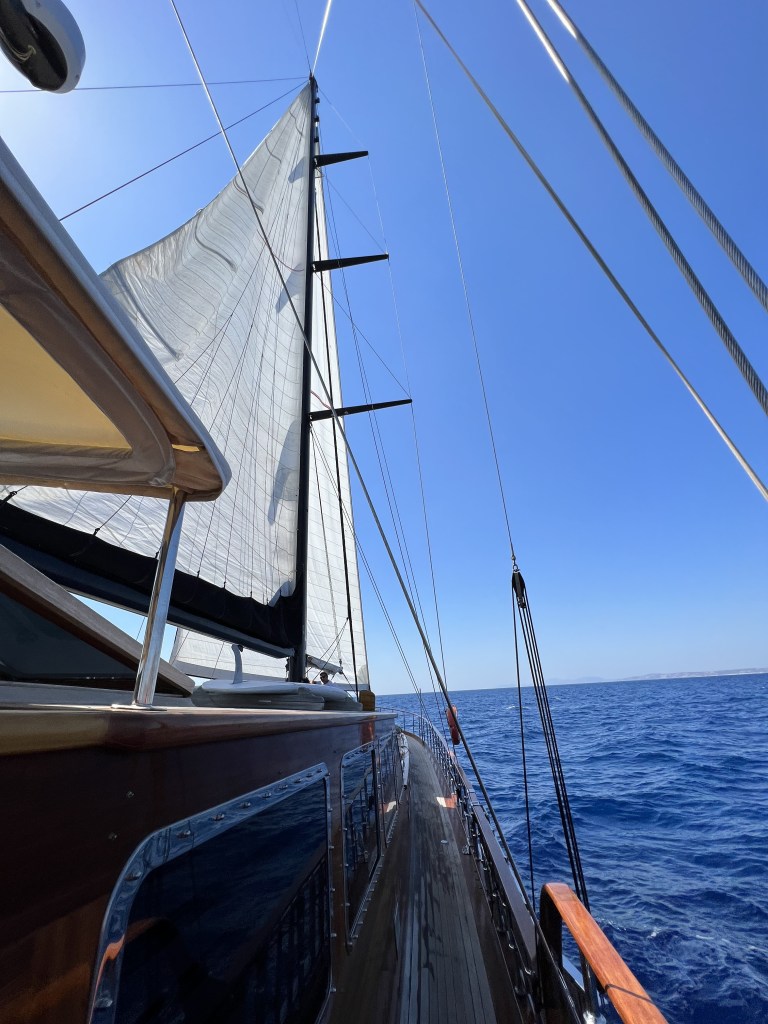
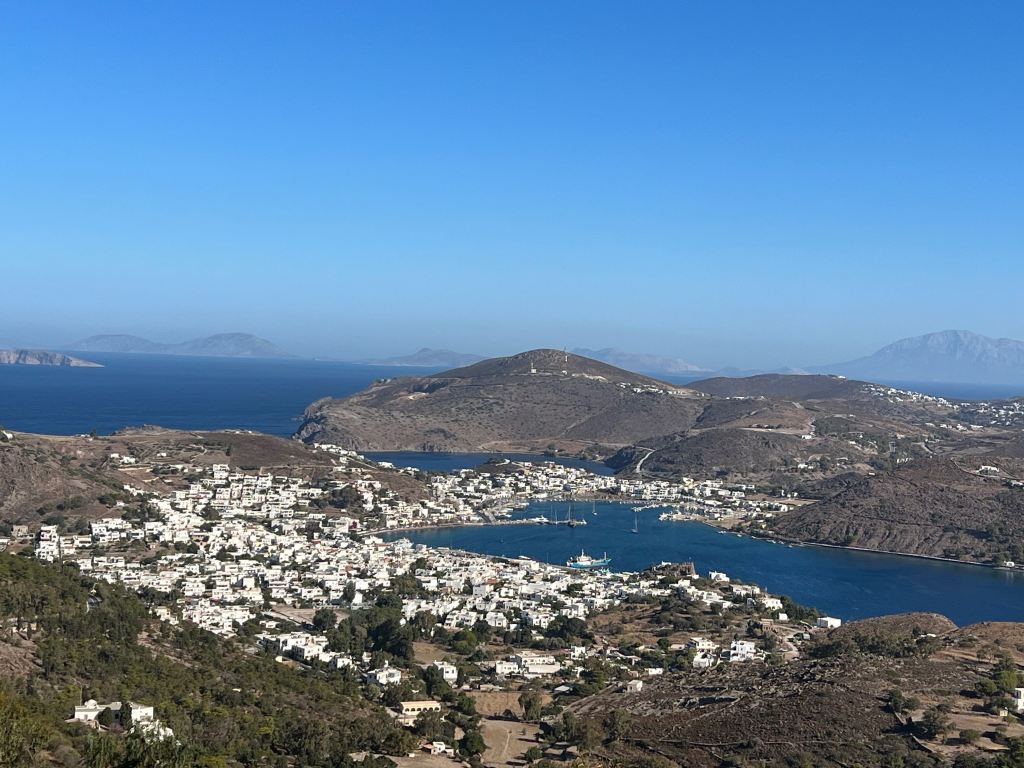
Our lazy days for the next two weeks fell into a pattern of gargantuan breakfast, one or two swims, a walk through a cute town, and either a bike ride or visiting an interesting site on the islands. We were in a different harbor every night, as we explored all the Dodecanese islands had to offer.
The highlights of these lazy days included:
- Fabulous food, wine, and conversation, always.
- Samos island: the Heraion (as the name implies, a temple to Hera), which was more than twice as big as the Parthenon of Athens. It is not well preserved, but it is prodigious.
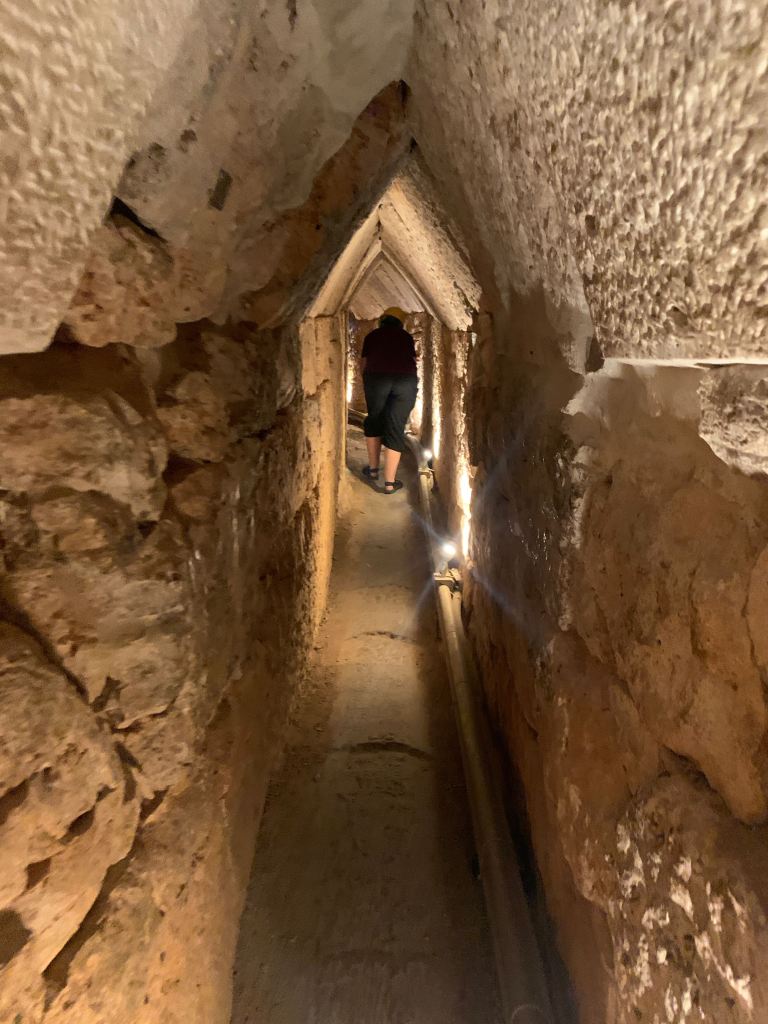
- Samos island: Tunnel of Eupalinos, a 1 km long water supply tunnel through a mountain. Eupalinos was the engineer who figured out how to dig the tunnel from both ends, without the aid of gps. Scholars are still not certain how this masterful feat of engineering was accomplished.
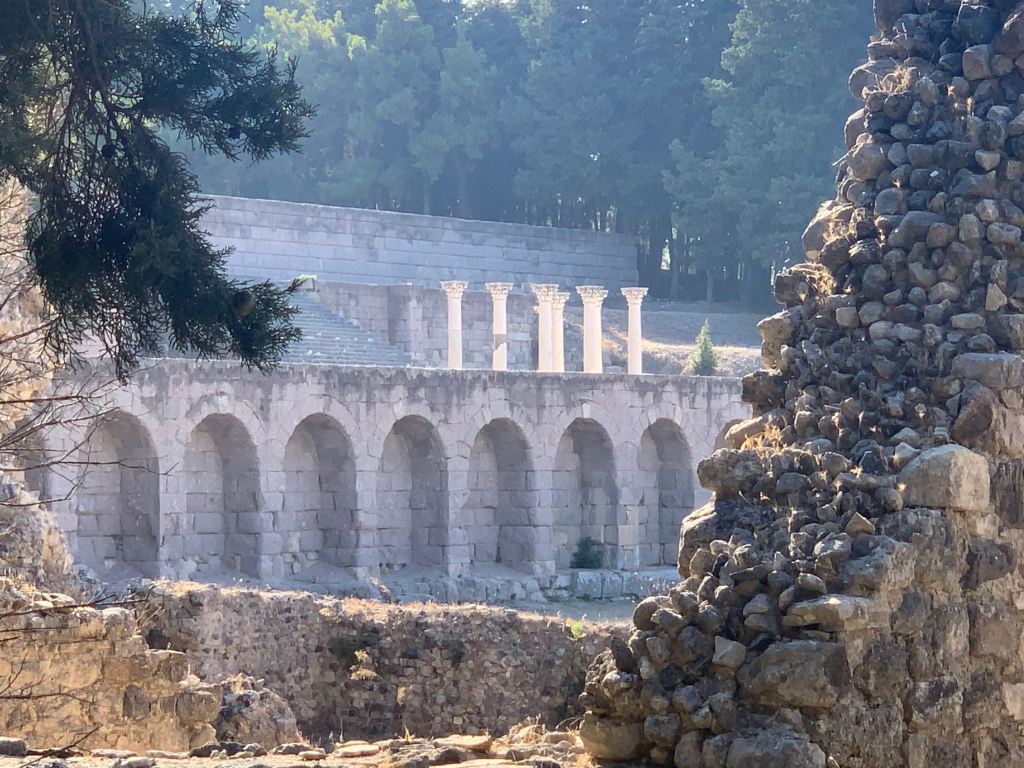
- Kos: the Asclepieion of Kos is where Hippocrates founded the profession of medical care (as opposed to medicine as a kind of priestly activity before his innovations).
- Nisiros island: Like many Greek islands, including most famously Santorini, Nisiros is volcanic. We walked down into the volcanic crater to examine the steam vents.
- Rhodes island: The city of Rhodes is interesting, but far too crowded and touristic. Tony and I arose early and walked the city walls in the dawn light.
- Rhodes island: Walking up (and I do mean up) to the acropolis of Lindos with a horde of tourists.
- Back in Turkey: A fabulous bike ride on Datça, one of the best bike rides ever (though rivaled by several rides on the subsequent phase of our journey, which will be described in our next post)
- And the last day: An excellent bike ride that ended at the remote ancient site of Knidos, which is both very interesting and almost devoid of tourists.
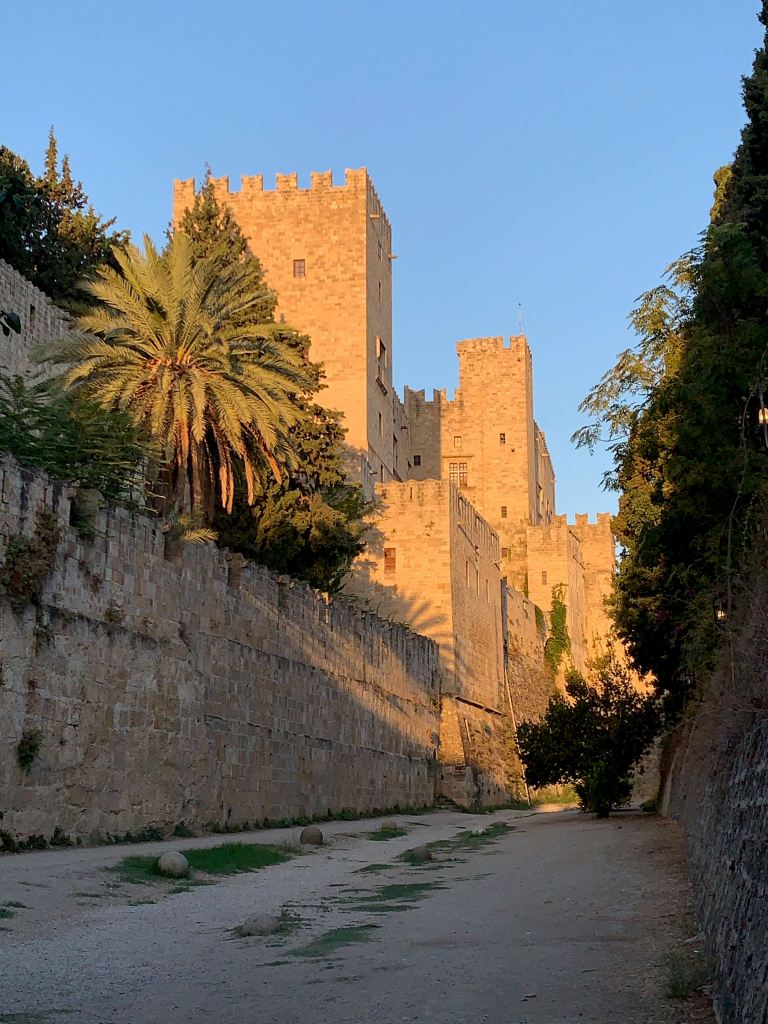
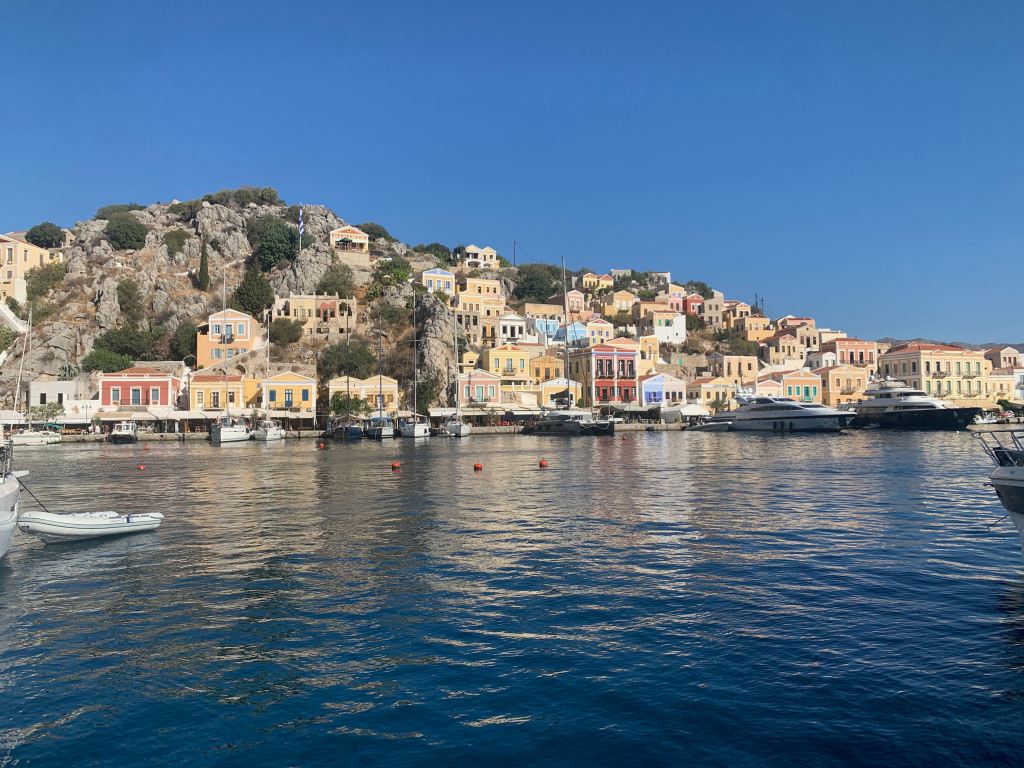
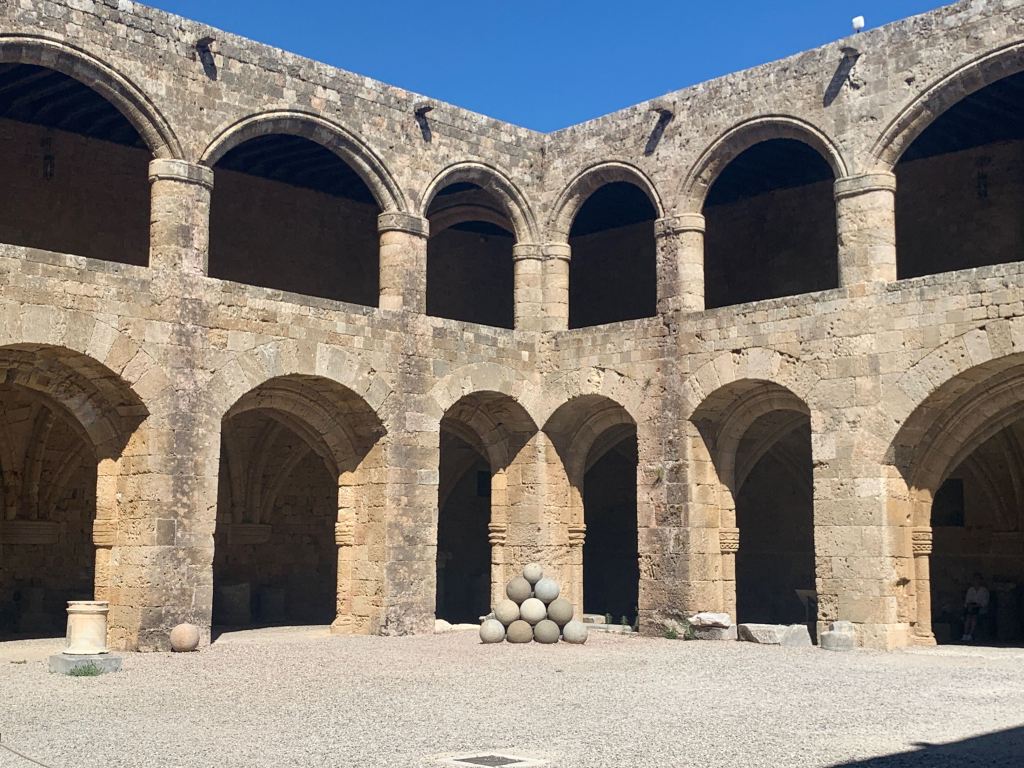
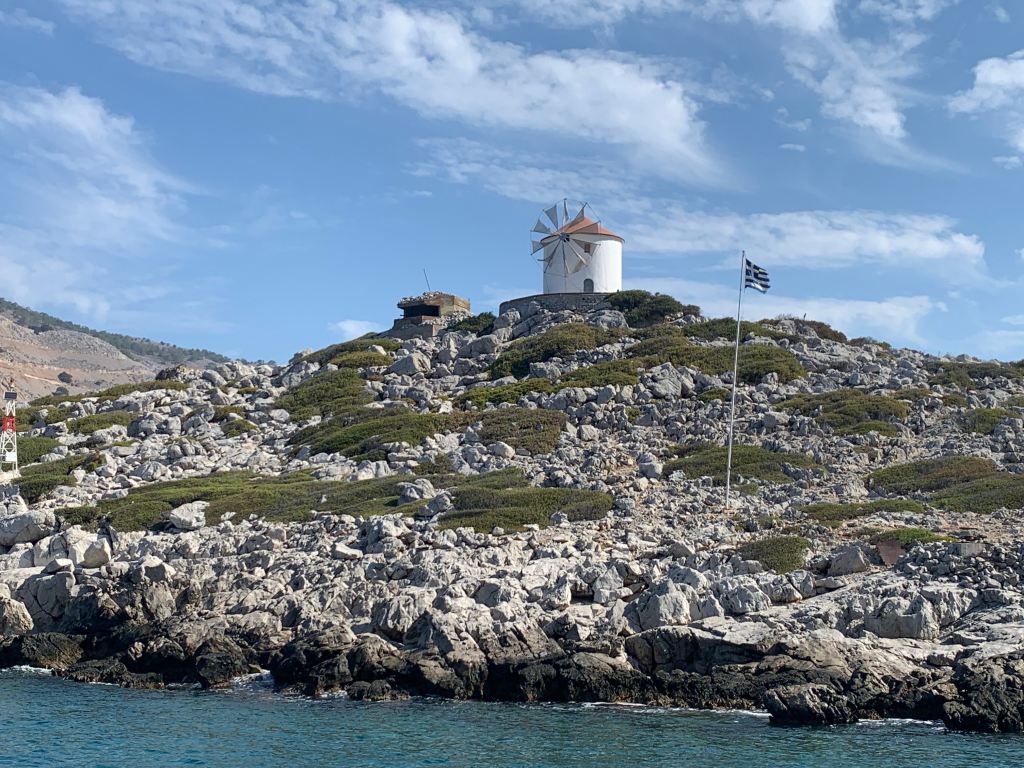

Sailing: Norway v Greece, Sea Rose v Kaya Guneri
Our two sailing adventures were very different. It’s fun to compare and contrast.
- Sailing time: Sea Rose (SR) 90%; Kaya Guneri (KG) 0.01%
- Water temperature: Norway 54F (12C); Turkey/Greece 82F (28C)
- Swimming opportunities: Norway 0 (Tom had to swim once to clean some weeds off the propeller. This did not look fun); Turkey/Greece daily
- Cabin air conditioning: SR non-existent though entirely unnecessary; KG excellent
- Required to share bed with luggage: SR yes; KG no
- Ensuite bathroom: SR yes; KG yes
- Bathroom toilet paper situation: SR flushable; KG absolutely not, do not do it
- Negronis: Tom experimented with replacing gin with aquavit (a success); on KG the cocktails were always short pours, which makes sense given the boat movement. And you can always have another!
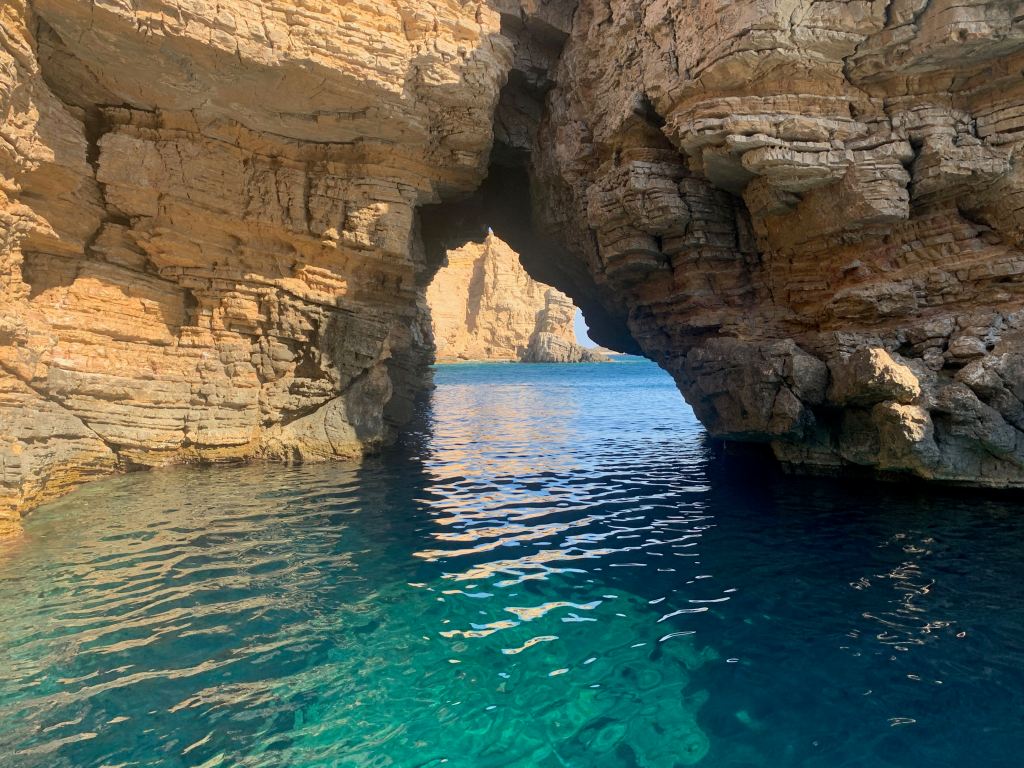
- Natural wonders: A tie; both Norway and Turkey/Greece are gorgeous
- Historical sights: Norway one stave church; Turkey/Greece ancient ruins everywhere you look
- Food: Norwegian food does not compete with Greek and especially Turkish cuisine by a professional chef.
- Seasickness: Tony was sick for about 15 minutes on SR; no one was sick on KG, which was obviously a primary goal of the captain
- Hitting daily exercise targets: SR 50%; KG 100%
- Crew to guest ratio: SR 1 to 1; KG 1 to 2
- Bed made each day: SR 100% (by us); KG 100% (by crew)
A year of travel: running totals
9 months into our year-long trip we have been in:
- US States: 7 (Oregon, California, Arizona, New Mexico, Texas, Louisiana, Mississippi)
- Countries: 16 (US, Mexico, Cuba, The Netherlands, Belgium, France, Switzerland, Germany, Austria, England, Kenya, Wales, Greece, Scotland, Norway, Turkey)
- plus two unofficial, 60-second visits into Guatemala and Tanzania for Tony
- Continents: 4: North America, Europe, Africa, Asia
- Different beds: we’ve slept in 110 different beds (119 if you include same hotel/house but different rooms each visit)
 Itinerant Philosopher
Sounds so amazing!!! So glad you got to see Aydin. 🖤🖤🖤. Miss you two.
LikeLike
Nice writeup…and ofcourse we were both thoroughly entertained by your comparison of sailing with us in Norway vs your journey in Turkey! So happy we were able to spend time together in north Norway. Hope your Camino experience is equally pleasurable. Take care!
LikeLike