
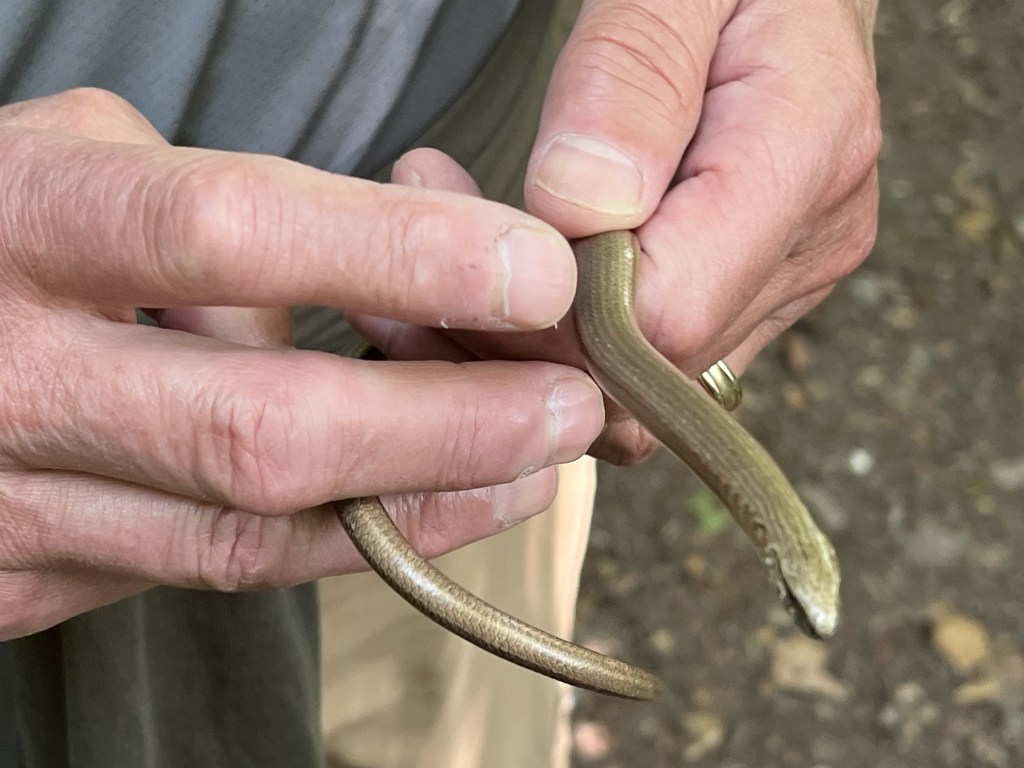
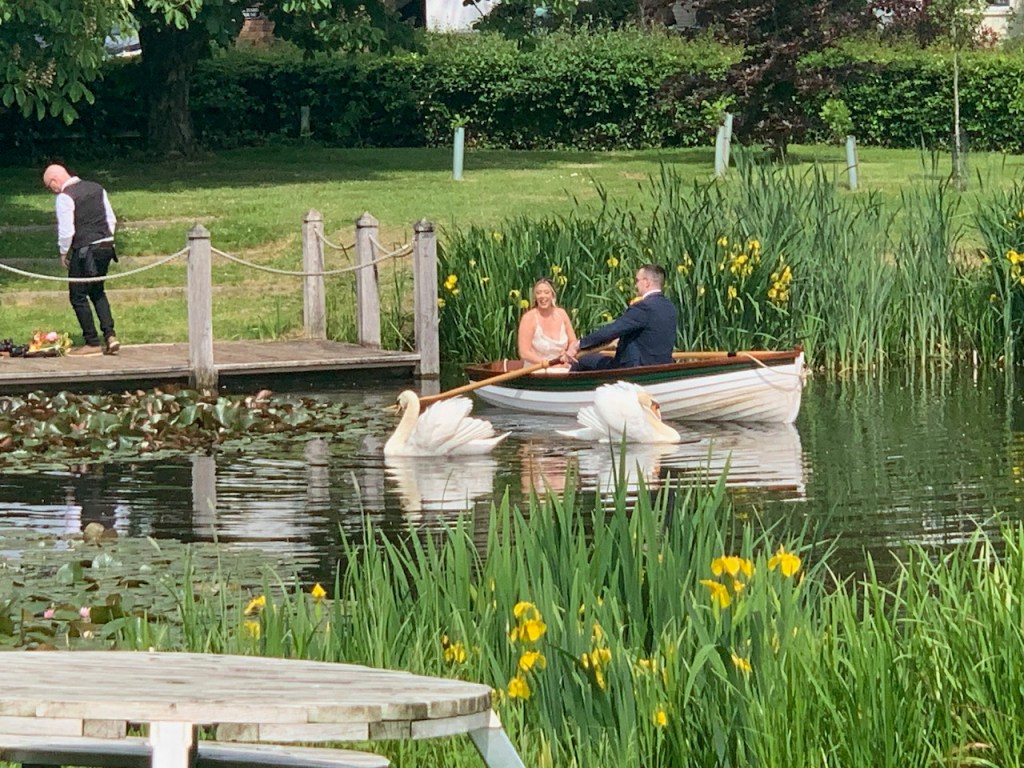
During our month-long motor tour around England, our wildlife sightings amounted to a slow worm (similar but unrelated to skinks), a pair of angry swans and their cygnets, and various birds and rodents. Desperate for selfies with cute critters, we decamped for Kenya.
A brief stopover in France
Our route to Kenya passed through Paris. We took the Eurostar through the Chunnel, which was fine as far as the actual train journey was concerned, but the passport control line is insane. I can’t recommend it, despite being greener than flying.
After storing half of our luggage in Paris (the luggage restrictions for our in-country Kenya flights were quite strict), we headed out to the lovely town of Sens to visit friends Claudine and John, in their new flat. We loved Sens, on the banks of the quiet Yonne River, in the northern reaches of the Bourgogne region. It has tons of history: the first ever gothic cathedral, Roman wall remnants, good restaurants, it’s entirely walkable, near famous wine country, pretty and pleasant. Claudine and John spend summers there to escape the sweltering heat of San Francisco. Our wonderful hosts took us on a tour of a wine cave (yummy Crémant); toured the region; visited a brand new wine museum in Chablis; and returned for a fabulous dinner at the fish market that included several dozen oysters. We will be back (possibly à vélo).
Tony and I also spent a day at Versailles with 10,000 other people. We didn’t see it all, but I doubt we’ll return.
Nairobi
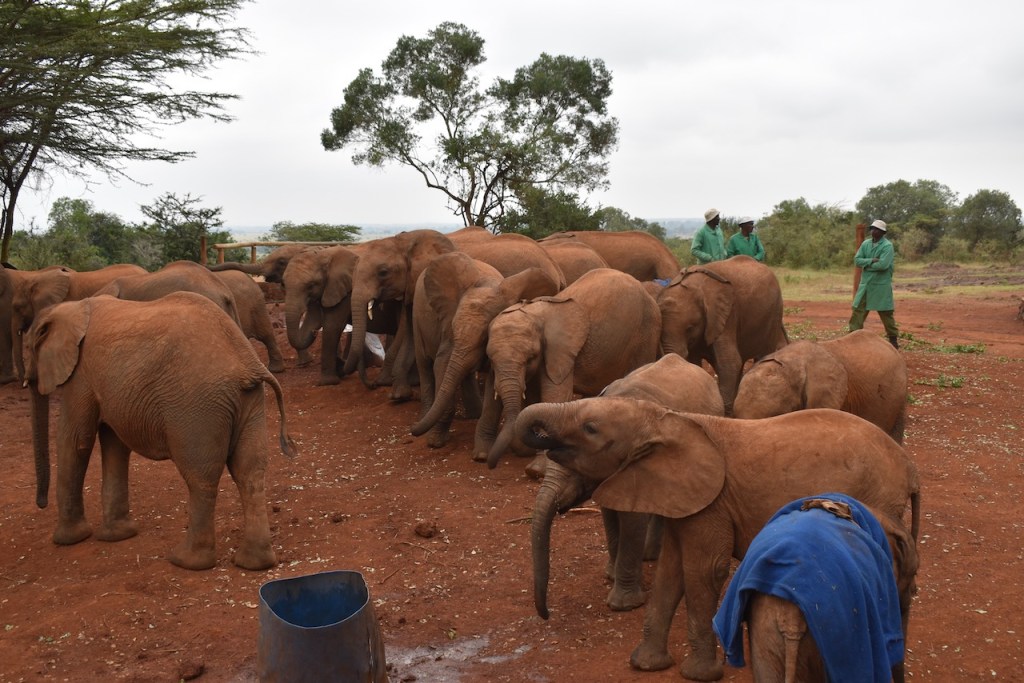
Our Kenya adventures began with a few nights in Nairobi. To be accurate, 1.5 nights as we arrived very late. Nairobi is a modern city which is hard to love. We visited a couple of interesting places, notably the Sheldrick elephant and rhino orphanage. Due to a scheduling snafu, our group of 14 paid up for a private early morning visit. The private tour is absolutely worth doing if you have a large enough group. And the fees go to the orphanage. Sheldrick does an amazing job rescuing orphaned elephants from around Kenya, raising and weaning them (4 years!), and then successfully releasing them to the wild, a process which can take an additional year.

After a quick visit to the Giraffe Manor to hand-feed giraffes, we were ready to get out of the Nairobi traffic and head out on safari.
Into the Bush
We spent a total of 8 nights at two properties in the bush. Our first stop was Loldia House, on the shores of Lake Naivasha. The big win here–besides the luxurious accommodations, beautiful scenery, and lovely staff–were the thousands and thousands of flamingos at a nearby lake. Each and every day we saw giraffes, cape buffalo, hippos, lions, zebras, various grazers including the tiny dik-dik, a ton of birds, and once a few rhino. Then we moved to Little Governor’s Camp in the Masai Mara, where we really saw a lot of wildlife.

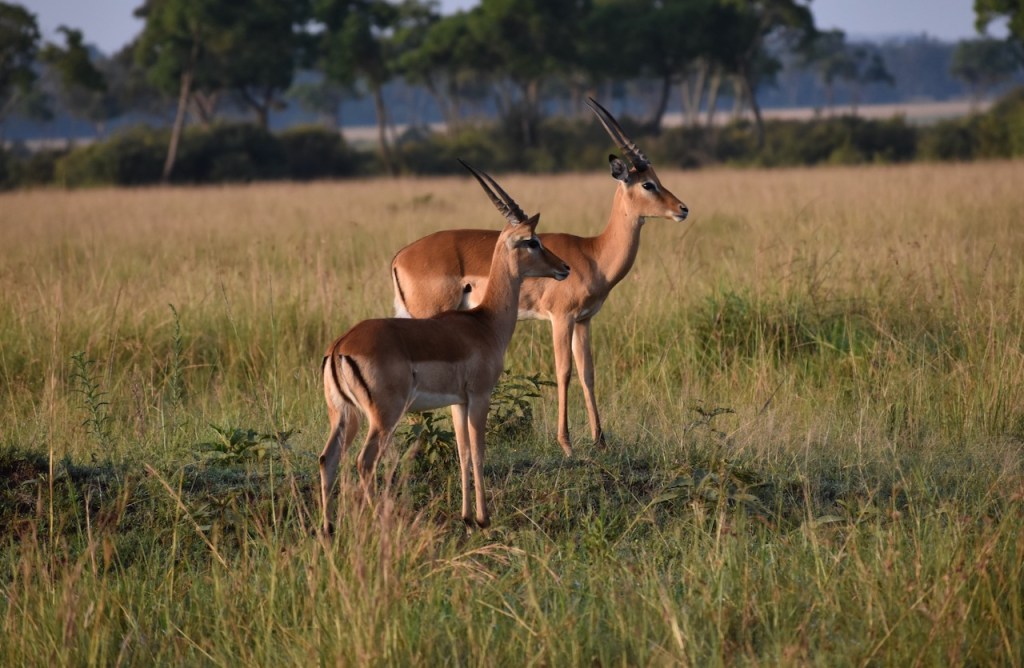
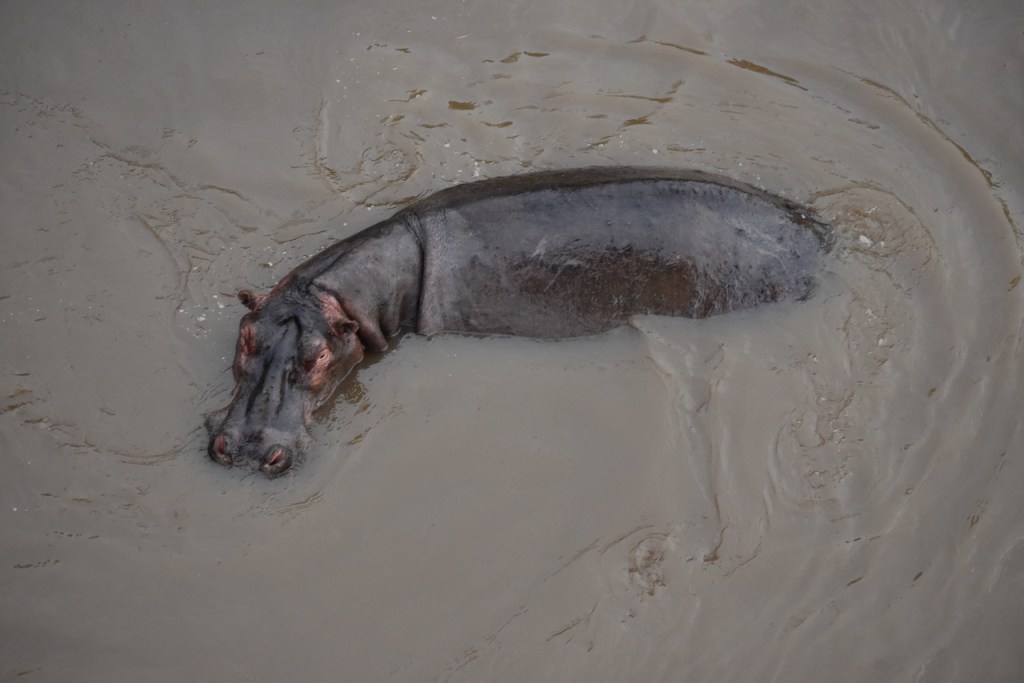

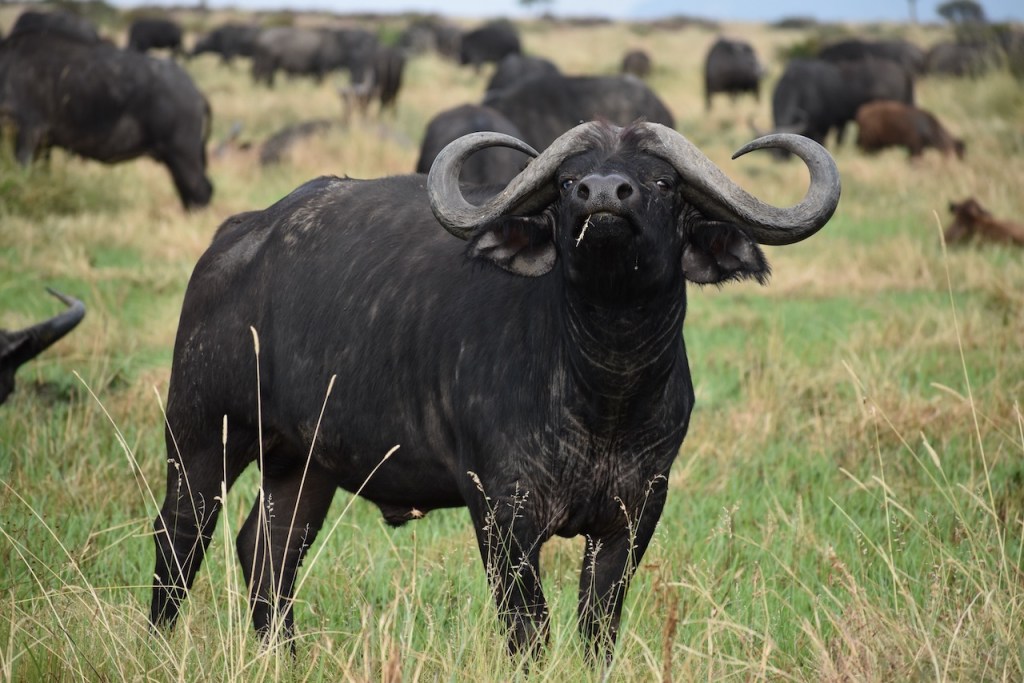
The Masai Mara is geographically contiguous with Tanzania’s Serengeti. The animals move freely across the national borders, but people have to fill out some paperwork. We stayed on the Kenya side. This is a region you’ve seen on TV: great sweeping vistas of grasslands and rolling hills. The Mara river, on which the Little Governor’s Camp is situated, is where the famous photos of the wildebeest migration occur (where Simba’s papa was trampled).
Camp is a term that bears some explanation. The resort is indeed a camp, meaning all the buildings are tents. But oh what tents! We’re not talking ultralight backpacking tents here. Each sleeping tent is a little cottage with a king bed, wood floor, and en suite. Even more exciting, Little Governor’s is an open camp, which means the wildlife is free to come and go. And they do! We saw or heard hippos, elephants, hyena, lions, and of course warthogs, most often at night. Yes it’s technically possible for the animals to enter or knock down your tent, but unless you’ve stashed a gazelle or baby hippo under your bed, they will not. On the other hand, you need to be careful. Of the 72 staff at Little Governor’s (for at most 40 guests), at least 10 were armed guards who patrolled the grounds day and night (especially night). You did not leave your tent once the sun went down, without signaling for an armed escort. We found the open camp concept to be very cool, but the majority of resorts are actually closed behind electric fences.
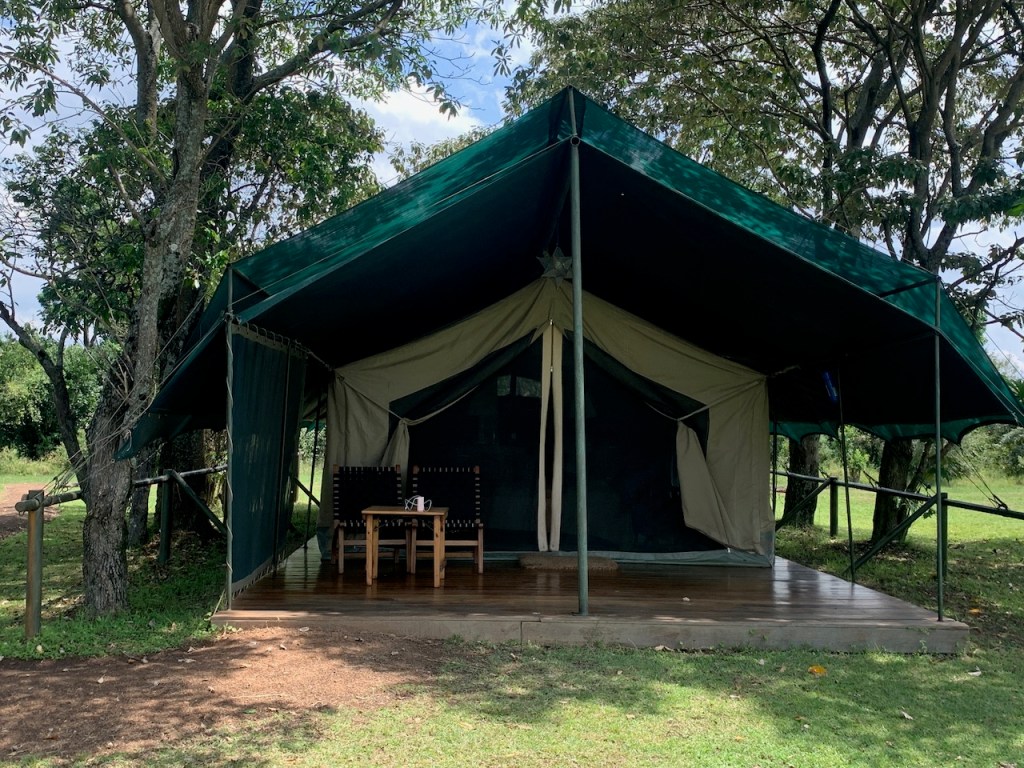
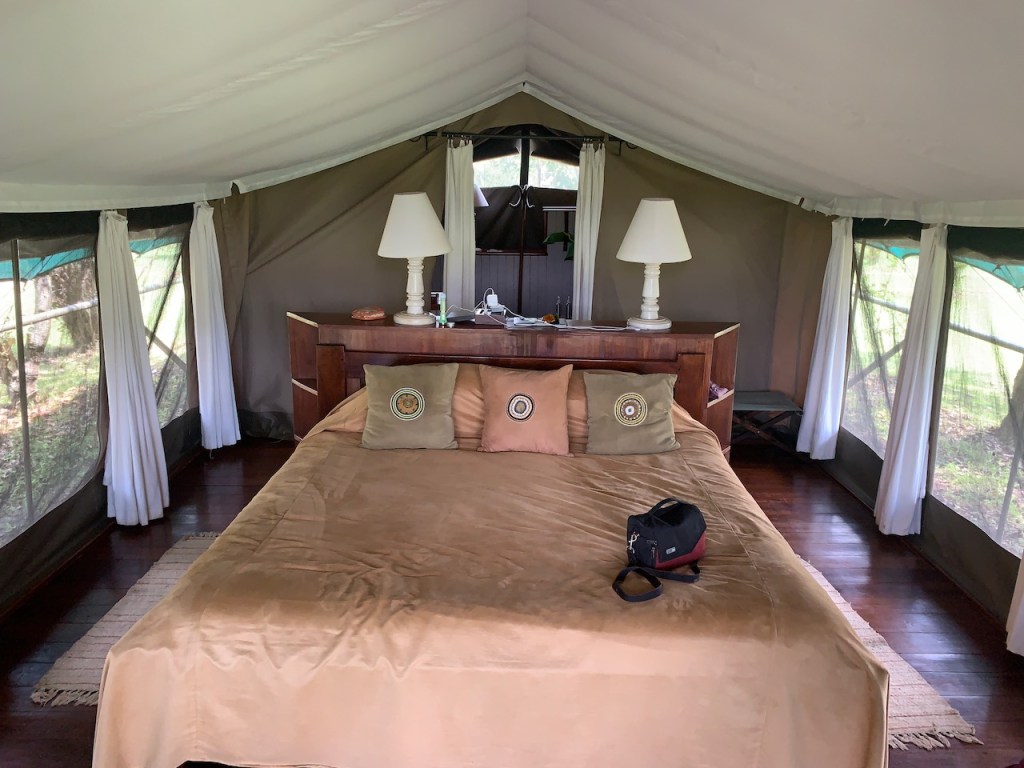

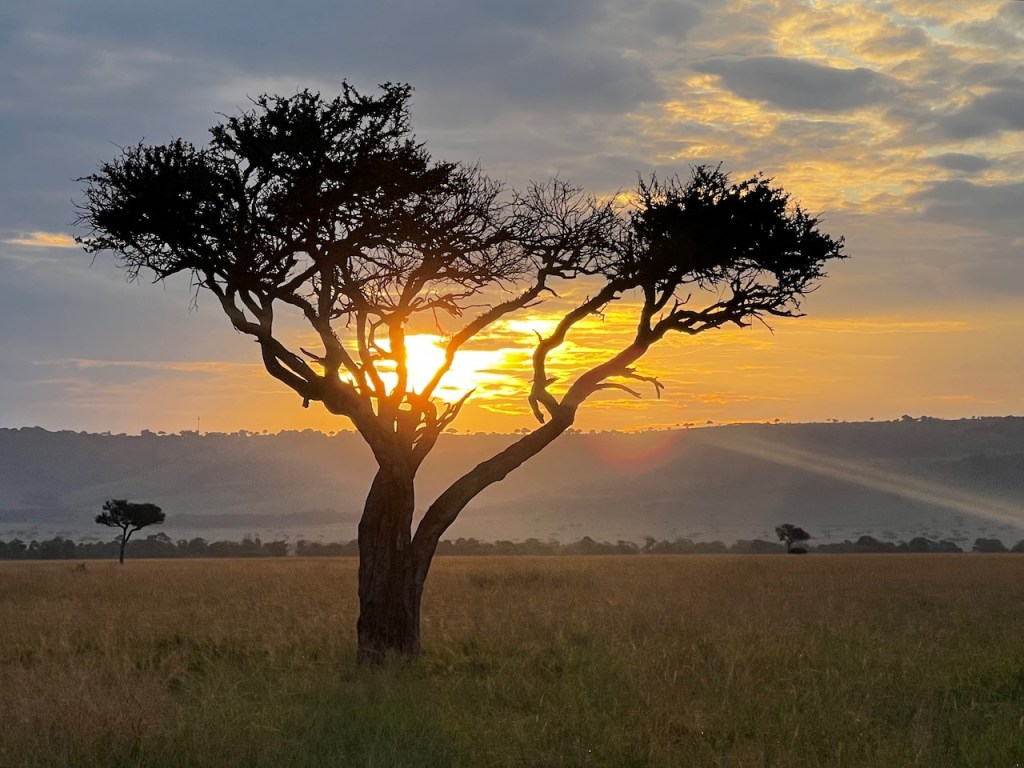
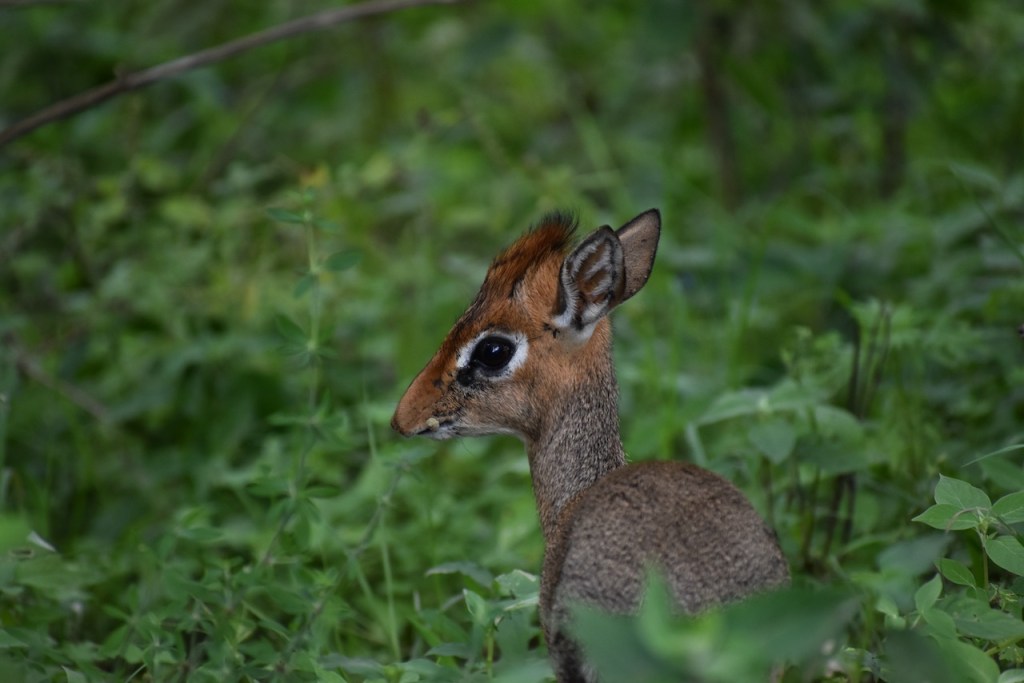
Both resorts were all inclusive, including all the game drives you wish. The food was very good, and the kitchen gracefully accommodated special diets. Little Governor’s managed the flights between its properties, on small planes that flew into very small airstrips. Little Governor’s also hosts the daily hot air balloon ascension, which was awesome (though expensive).
On Safari
Most days, we went on a game drive at dawn and at dusk. Most often, the morning drive left at 6:30 (or whenever you wish, but the animals are most active at dawn). Usually we came back for a late breakfast, but once we had a nice picnic breakfast out in the bush. Once or twice we left after breakfast, but I preferred the early departure even though it was crazy early. The afternoon drive usually went from 3:30-6:30.
The vehicles were modified land rover type open sided jeeps, holding 4-6 tourists in 2-3 rows. Some other resorts packed more people into their vehicles, but I appreciated always having a window seat. The biggest physical challenge on safari is just sitting in the jeeps as they move down the Mara roads, and I use the term road loosely. Though the jeeps are reasonably comfortable, nothing is truly luxurious for 3 hours of bone jarring travel on muddy tracks. Though I exaggerate–you do spend a lot of time stationary while observing some interesting animal behavior.
If you’ve never gone on safari, it’s hard to grasp how very many animals you see, and how close you get to them. Of course the rules specify a certain distance from animals, but if they’re napping on the road it’s hard to stay far away. The guide/driver can spot, explain, and predict the movement and behavior of the animals. A good guide will help you see far more than you ever could on your own.
Wildlife
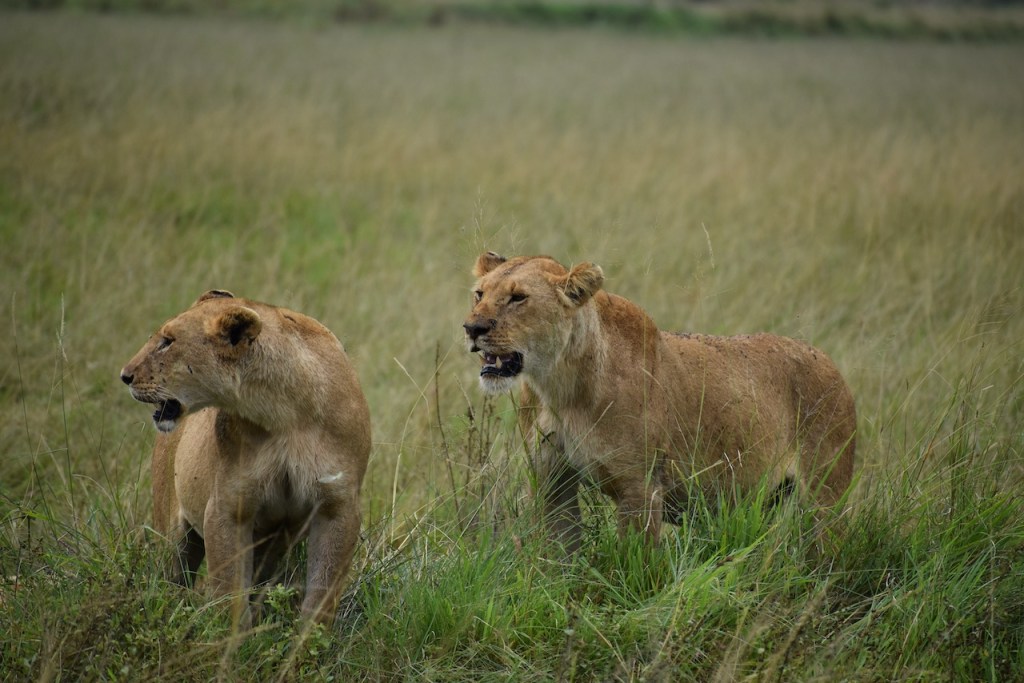
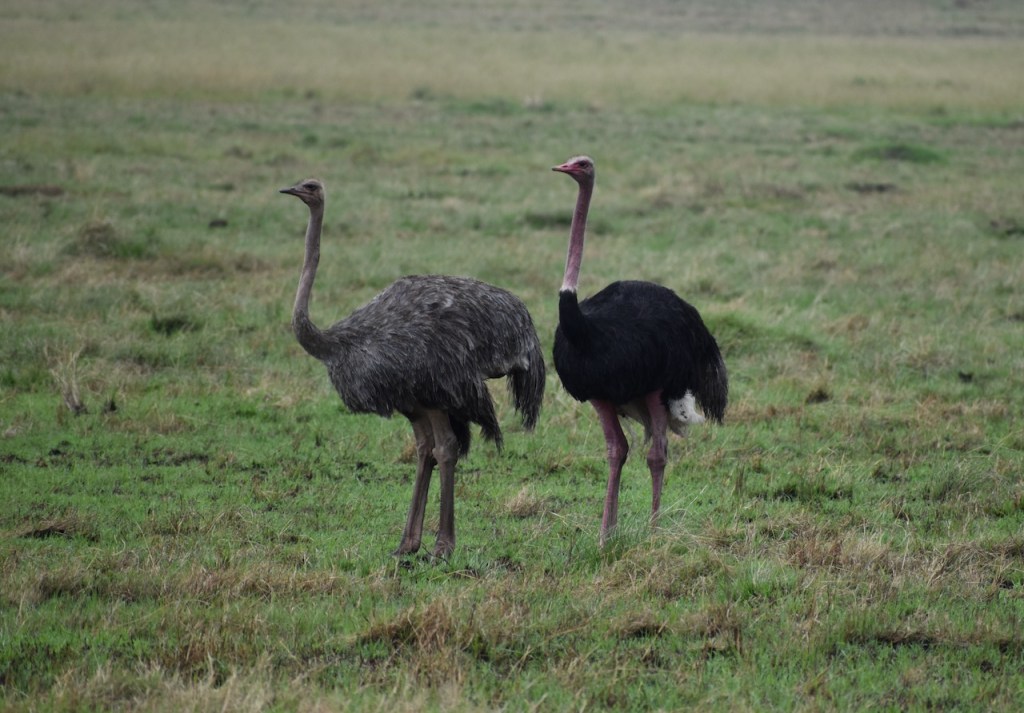
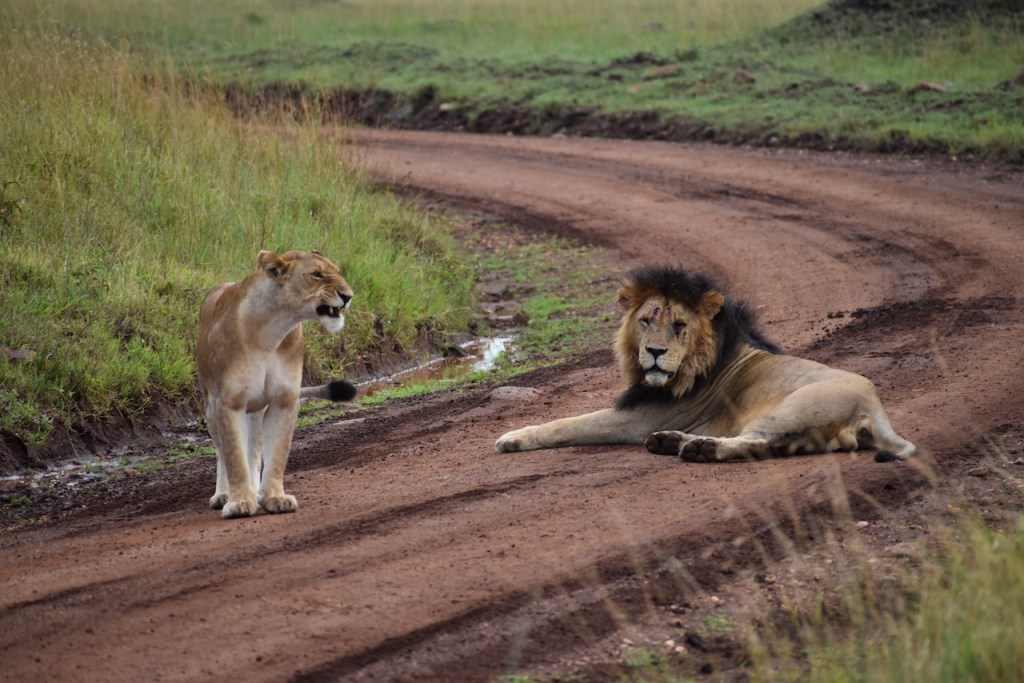
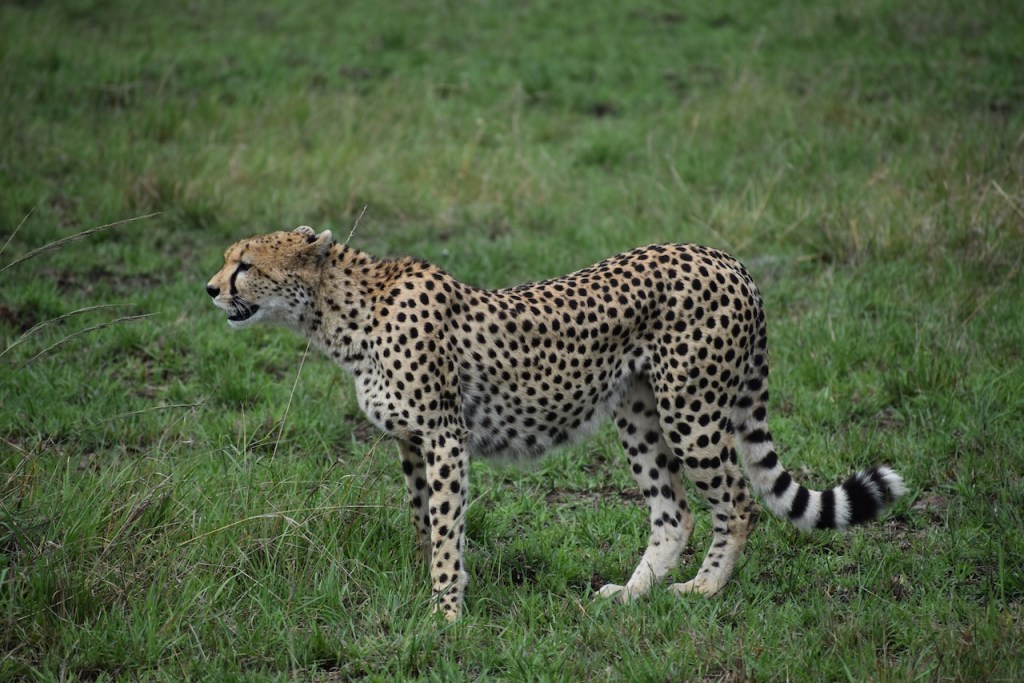
We saw so much wildlife, so often, it’s hard to describe. The highlights include:
- Various young animals (lion cubs, hippos, elephants, zebras, giraffe)
- Cheetahs chasing down (but not catching) prey
- Cheetahs being chased away from their kill by a mean hyena
- Lions lolling in the sun as they digest their meal
- Interesting hierarchy of who eats what, and when
- Sunrise over the Mara from a hot air balloon
- Lion sex
- Gazelle birth
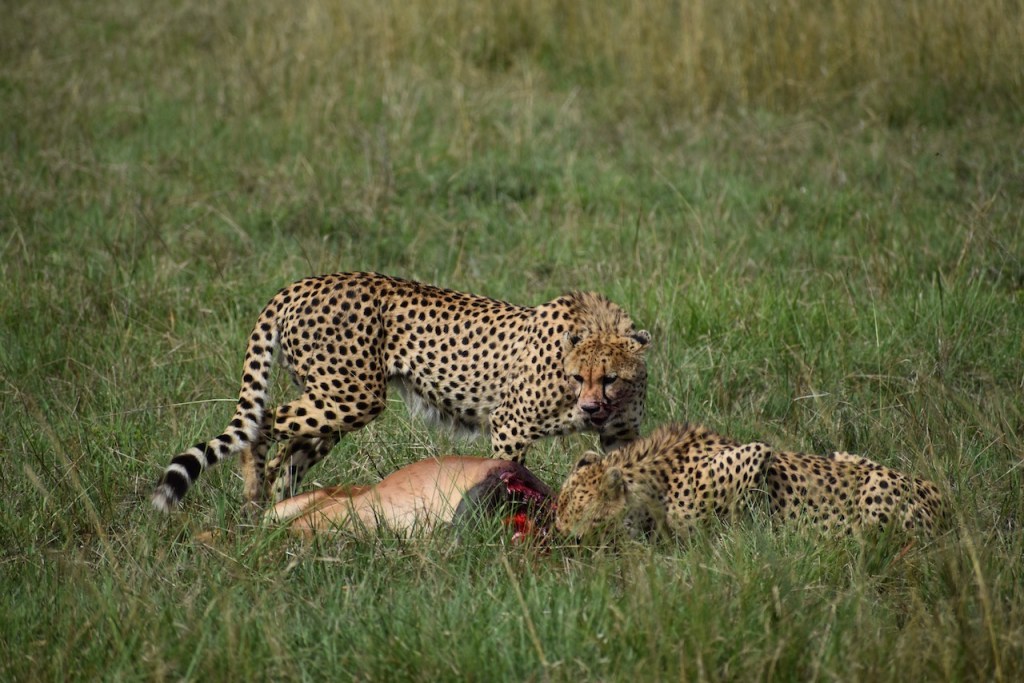
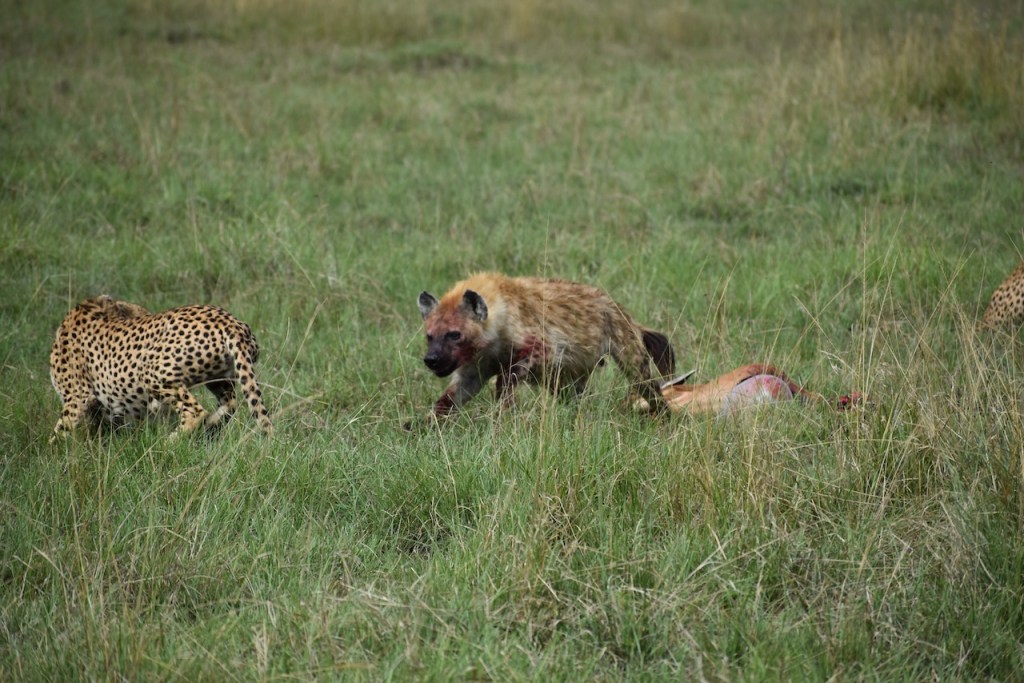
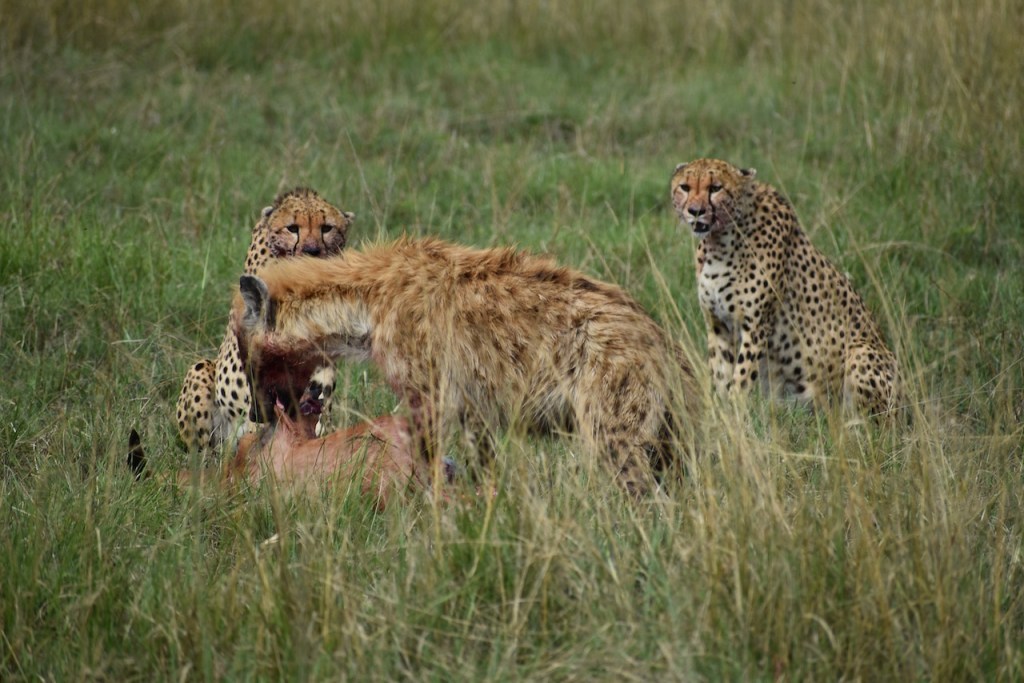
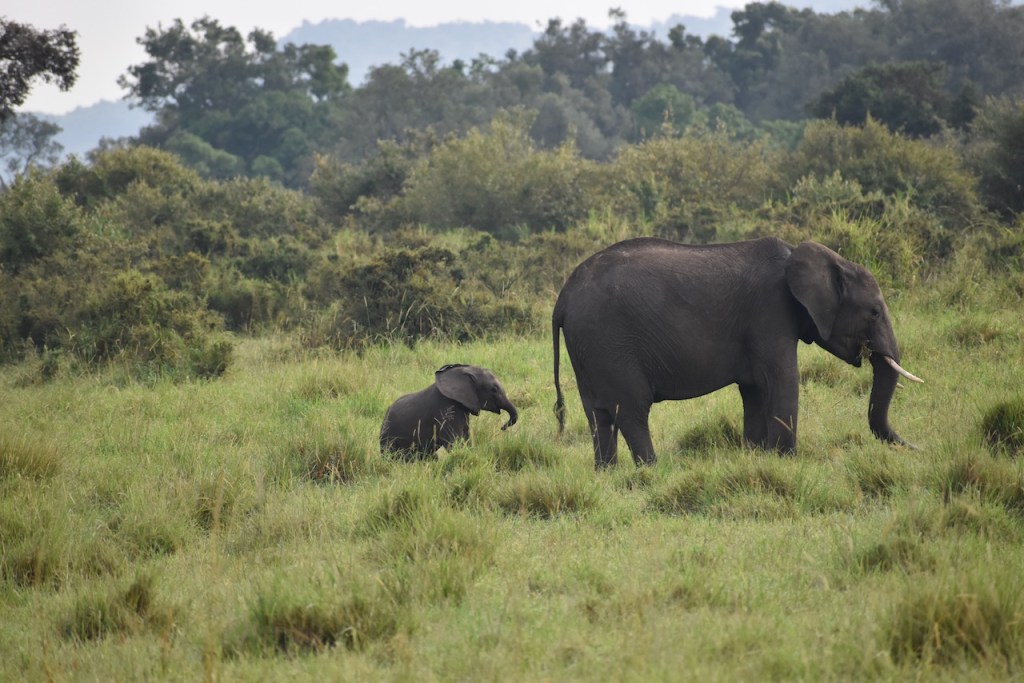
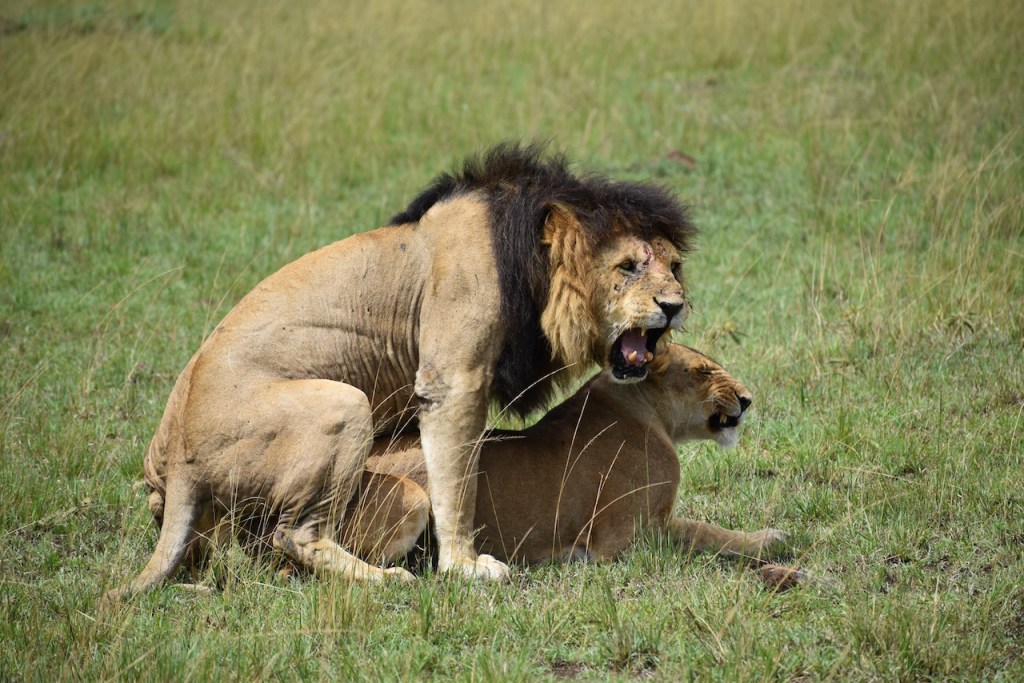
We were never able to view an actual Kill event, nor did we catch sight of a leopard.
Kenya Kudos
Kenya does a lot of things well, which make it an easy place for Americans and many Europeans to visit.
- English is widely though not universally spoken
- Tourist visas (from the US) are easy to obtain, though attention to detail is important
- Getting through passport control and customs took a long time, but mainly (as far as I could tell) because a ton of flights land at the same time.
- Several major international airlines fly into Nairobi from European hubs such as Paris and Frankfurt. There are a few direct flights from the US as well.
- The resort companies or travel agencies will help arrange flights to the Mara or other resorts. Our in-country flights were managed by the Governor’s Camp group, to the extent of having their logo on the side of the plane.
- There is less litter in Kenya than other places we’ve visited (I’m looking at you Bali). The government forbids any single-use plastic.
- There is relatively little poaching. As our guide put it, “If you shoot an animal, we shoot you.” Poaching still exists, especially up near Somalia, but it’s gotten a lot better in the last decade.
- Everyone in our group was inoculated against yellow fever and took anti-malaria meds (though one person stopped the malaria meds because her system didn’t tolerate it well). Nairobi is not at risk for those diseases, but the travel clinics recommended yellow fever and malaria for the bush, so we all took them. Whether or not those diseases were present, I can report that I received a grand total of 2 mosquito bites in 8 days, so I’m not very worried about getting sick.
- The weather was great. Though Kenya is on the equator, daily highs were 75 F (24 C) due to the high altitude.
What I’d Do Next Time
If I were to return to Kenya, which is unlikely but possible, I’d plan the following:
- Fly into Nairobi through Europe. Possibly spend a few days in Europe to get over jet lag before continuing on to Kenya.
- Spend one night in an airport hotel (the Crowne Plaza is nice), and leave for the bush the next day. I’d spend a full day in Nairobi only if I were in a large enough group willing to pay up for a private tour of Sheldrick elephant orphanage.
- Spend 5 nights at one safari camp in the Masai Mara.
- Bring binoculars for each person. Borrow if you have to. Although you are often very close to the animals, binocs help see the details of behavior.
- Bring a real camera with a big zoom, if you have one. Most of the photos in this blog post are Tony’s, from a new-ish SLR. Most people just used their phones.
- Budget for a balloon excursion.
- Spend a few days at Lake Victoria and Victoria Falls, or go to the coast and enjoy some beach time. Most safari resort companies such as Governors, also have properties on the coast south of Mombasa.
What I Wouldn’t Do (or Advise)
There are several ways to see the Kenyan wildlife that I would not recommend:
- Don’t travel with small children. Everyone needs to be able to sit quietly for 3 hours at a stretch.
- Don’t hire an inexperienced (inexpensive) guide. Great guides will spot wildlife you will never see. They know where animals are likely to be, and what their behavior means. They are living wikipedia guides. They talk to each other about where to see action. Their driving skills are exceptional. This is the most compelling reason to go to an upscale camp. Sure, the luxury is nice, but the best guides go to the best resorts.
- Don’t travel without a guide. I believe this is technically possible, but it seems like a waste of time and money. And scary as hell.
- Don’t book a few nights each in a bunch of camps. I think it’s more sensible to stay in one or two resorts. Transferring is tedious and takes time that could be spent looking at animals.
Go to Africa!
For many of my friends and acquaintances, an African safari is a lifelong goal. Yet, relatively few people I know have actually gone. I suspect the two main reasons are cost and fear/uncertainty. I can’t help with costs, but I hope this blog posts has helped reduce anxiety. A Kenya safari is an awesome experience that I hope everyone can enjoy.
 Itinerant Philosopher
Absolutely fabulous. I was in Kenya ad Tanzania in 1985 and it was the best time ever. Glad you experienced it.
LikeLike
I am so jealous. And so inspired. Defiant not , however, a trip to bring a small dog(aka “snack”)
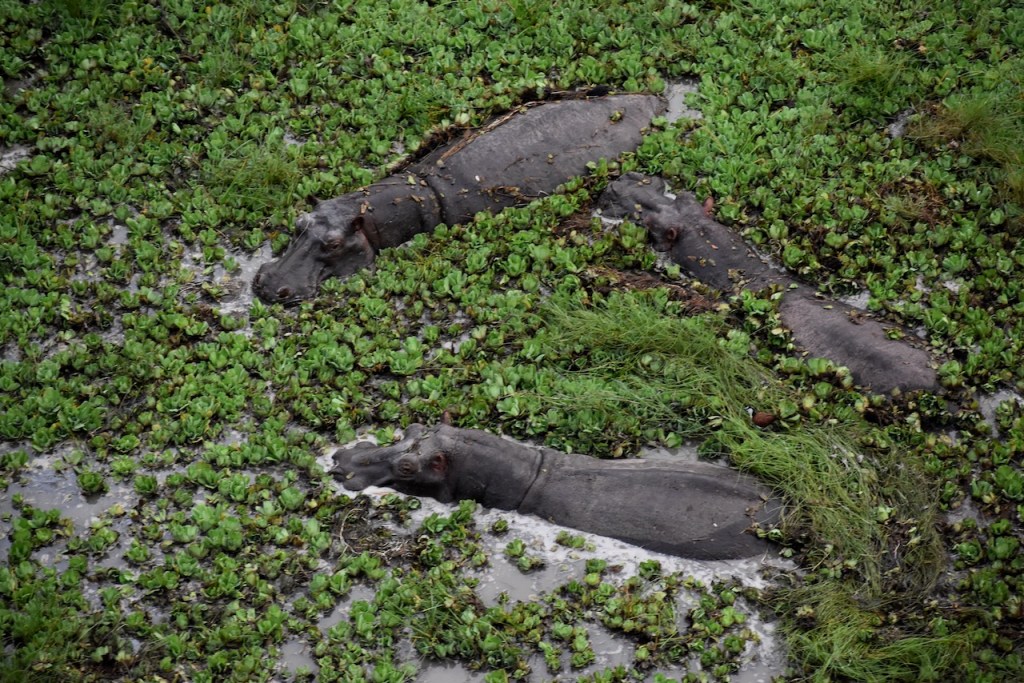
Maybe it’s my diet obsession at the moment but I especially liked the photo of the hippo lolling in a mud hole😁
LikeLike
I was fortunate to go on a safari in 2005 and have amazing memories and pictures. I agree with all that you’re saying! We camped in the Serengeti every night and it’s one of the things that I loved the most. We also had the pleasure of doing some tracking with the Masai for a few days. I loved every part of it. I enjoyed reading about your adventure and seeing the terrific pictures.
LikeLike